
Axial vs Radial Plain Bearings & Thrust Washers – A Guide to Self-Lubricating Bushings
Selecting the right bearing is critical for machinery performance, longevity, and cost-efficiency. In this guide, we break down the differences between axial (thrust) plain bearings, radial plain bearings, and thrust washers, with a focus on self-lubricating bushings. Using charts, tables, and side-by-side comparisons, we simplify the decision-making process for engineers and designers.

Get Instant Quote
To get your instant quote, just send your drawings file and select your production process and material.
Place Order
After placing your order, production will start. You’ll receive regular status updates.
Receive Parts
We provide quality assurance, quality reports, and delivery tracking.
Our complete product range, Plain bushings bronze, maintenance-free, Customized plain bearings to deliver optimal performance
Our plain bushing bearings at a glance.
What Are Plain Bearings?
Plain bearings, also known as sleeve or journal bearings, support rotating or sliding motion without rolling elements. They excel in high-load, low-speed applications and are often self-lubricating, reducing maintenance needs.
Axial vs Radial Plain Bearings – Material Comparison
A Guide to Selecting the Right Materials for Load, Speed, and Environment
Introduction
The performance of axial (thrust) and radial plain bearings hinges on their material composition. While both types manage loads and motion, their distinct load directions and operating conditions demand tailored materials. In this guide, we compare axial vs radial plain bearing materials, focusing on durability, lubrication needs, and environmental suitability.
Material Requirements for Axial vs Radial Bearings
- Axial Bearings: Handle parallel-to-shaft thrust loads, requiring materials with high compressive strength and resistance to axial wear.
- Radial Bearings: Manage perpendicular radial loads, prioritizing wear resistance and rotational stability.
- Self-Lubrication: Critical for both types in high-load or maintenance-free applications.
Common Materials for Axial Plain Bearings & Thrust Washers
Axial bearings (e.g., thrust washers) face intense axial pressure. Key materials include:
| Material | Properties | Best For |
|---|---|---|
| PTFE Composites | Low friction, dry lubrication, chemical resistance. | High-speed, low-maintenance thrust washers. |
| Bronze (Oil-Embedded) | Oil reservoirs for self-lubrication, high compressive strength. | Heavy axial loads (e.g., gearboxes). |
| Graphite-Metal | High-temperature stability (up to 400°C), solid lubrication. | Aerospace, turbines, and high-heat engines. |
| PEEK Polymers | Lightweight, corrosion-resistant, handles dynamic loads. | Chemical processing, food machinery. |
Example: Graphite-embedded thrust washers in turbines withstand extreme heat without external grease.
Common Materials for Radial Plain Bearings
Radial bearings (e.g., bushings) prioritize rotational wear resistance. Popular materials:
| Material | Properties | Best For |
|---|---|---|
| Oil-Impregnated Bronze | Self-lubricating pores release oil under friction. High radial load capacity. | Conveyors, motors, automotive suspensions. |
| PTFE-Lined Steel | Steel backing with PTFE coating for low friction and shock absorption. | Hydraulic cylinders, agricultural machinery. |
| Polymer Composites | Lightweight, corrosion-proof, quiet operation (e.g., nylon, POM). | Food processing, marine environments. |
| Sintered Iron | Cost-effective, porous structure for oil retention. | Industrial pumps, compressors. |
Example: Oil-embedded bronze bushings in conveyor rollers reduce wear under constant radial stress.
Axial vs Radial Bearing Materials: Comparison Table
| Factor | Axial Bearing Materials | Radial Bearing Materials |
|---|---|---|
| Key Strength | Compressive strength, heat resistance. | Wear resistance, rotational stability. |
| Top Materials | Graphite-metal, PTFE composites, bronze. | Oil-embedded bronze, PTFE-lined steel. |
| Load Focus | Axial (thrust) loads. | Radial (rotational) loads. |
| Speed Compatibility | Lower to moderate speeds (high-load focus). | Moderate to high speeds. |
| Self-Lubrication | Graphite, PTFE, or oil-impregnated designs. | Oil-embedded bronze, polymer composites. |
Self-Lubricating Materials: Axial vs Radial Use Cases
Self-lubrication is vital for reducing maintenance. Here’s how materials differ:
- Axial Bearings:
- Graphite: Ideal for high-temperature axial loads (e.g., turbines).
- PTFE: Reduces friction in oscillating thrust applications (e.g., robotics).
- Radial Bearings:
- Oil-Embedded Bronze: Sustained lubrication for rotating shafts (e.g., motors).
- PTFE-Lined Bushings: Quiet operation in radial sliding motions (e.g., hinges).
Axial (Thrust) Bearings & Thrust Washers
- Function: Handle axial loads (parallel to the shaft).
- Common Types: Thrust washers, flange bearings, and self-lubricating thrust plates.
- Applications: Gearboxes, automotive transmissions, and helicopter rotors.
- Self-Lubricating Options: Use embedded materials like PTFE or graphite for frictionless operation.
Example: Thrust washers in a car’s clutch assembly prevent metal-to-metal contact during pedal engagement.
Radial Plain Bearings
- Function: Support radial loads (perpendicular to the shaft).
- Common Types: Cylindrical bushings, flanged bearings.
- Applications: Conveyor systems, pumps, and electric motors.
- Self-Lubricating Options: Bronze or polymer bushings with oil-impregnated pores.
Example: Radial bushings in conveyor rollers ensure smooth rotation under heavy radial loads.
Self-Lubricating Bushings: Key Benefits
- Low Maintenance: No external grease required.
- High Durability: Ideal for harsh environments (high temps, contaminants).
- Materials: Bronze (oil-embedded), PTFE (low friction), and graphite (high-temperature).
Axial vs Radial Bearings: Key Differences (Table)
| Factor | Axial Bearings | Radial Bearings |
|---|---|---|
| Load Direction | Parallel to shaft | Perpendicular to shaft |
| Common Types | Thrust washers, flange bearings | Cylindrical bushings, journal bearings |
| Load Capacity | High axial, low radial | High radial, low axial |
| Typical Applications | Gearboxes, turbines | Pumps, motors, wheels |
| Self-Lubricating Materials | PTFE, graphite layers | Oil-impregnated bronze, polymers |
Self-Lubricating Materials Comparison (Table)
| Material | Lubrication Method | Max Temp (°C) | Load Capacity | Best For |
|---|---|---|---|---|
| Oil-Embedded Bronze | Oil released under friction | 250 | High | Industrial machinery |
| PTFE-Coated | Dry film lubrication | 280 | Moderate | Food processing, clean environments |
| Graphite | Solid lubricant | 400 | Low to Moderate | High-temperature engines |
Radial Bearings: Handling Perpendicular Loads
Function: Designed to support forces acting perpendicular to the shaft (radial loads).
Common Types:
- Self-Lubricating Radial Bearings: Ideal for high-speed rotations with minimal maintenance.
- Cylindrical Bearings: Engineered for heavy radial loads (e.g., conveyor systems).
VIIPLUS Solutions:
- Self-Lubricating Graphite Bearings: Perfect for high-load radial applications (up to [X] MPa).
- Oil-Embedded Bronze Bushings: Deliver durability in industrial machinery.
Applications: Electric motors, wheels, conveyor rollers.
Axial Bearings (Thrust Bearings): Managing Parallel Loads
Function: Support forces acting parallel to the shaft (axial/thrust loads).
Common Types:
- Thrust Washers: Simple discs for moderate axial loads.
- Flanged Thrust Washers: Reinforced edges for heavy-duty applications.
VIIPLUS Solutions:
- PTFE-Lined Thrust Washers: Offer low friction and chemical resistance.
- POM Thrust Pads: Lightweight and ideal for dampening vibrations.
Specialized Option:
- Fiber-Reinforced PTFE Thrust Washers: Combine high axial load capacity with corrosion resistance.
Applications: Gearboxes, turbine engines, clutch assemblies.
How to Choose the Right Bearing
- Identify Load Direction: Axial (thrust) vs. radial.
- Assess Environment: Temperature, contaminants, lubrication access.
- Prioritize Maintenance: Self-lubricating options reduce downtime.
- Material Matters: Match to load, speed, and corrosion resistance needs.
Decision Flowchart:
- Load axial? → Thrust washer or axial bushing.
- Load radial? → Radial plain bearing.
- Harsh conditions? → Self-lubricating graphite or PTFE.
Conclusion
Understanding the differences between axial and radial plain bearings, along with self-lubricating thrust washers, ensures optimal performance and cost savings. Use the tables and charts above to simplify your selection process. For high-maintenance environments, self-lubricating bushings are a game-changer—combining durability with efficiency.
Keywords: Axial vs radial bearings, thrust washer, self-lubricating bushing, plain bearing comparison.
Boost your machinery’s lifespan—choose the right bearing today! 🛠️
Bearings for Combined Radial & Axial Loads
Some applications require bearings to handle both load types. Key designs include:
- Angular Contact Ball Bearings:
- The contact angle distributes loads evenly.
- Ideal for pumps or machine tools with mixed forces.
- Metal-Polymer Flange Bearings:
- Supports high radial loads with light axial forces.
- VIIPLUS’s flange bearings feature self-lubricating polymers for longevity.
Radial vs Axial Bearings: Side-by-Side Comparison (Table)
| Factor | Radial Bearings | Axial Bearings |
|---|---|---|
| Load Direction | Perpendicular to shaft | Parallel to shaft |
| Common Types | Cylindrical bushings, self-lubricating | Thrust washers, flanged bearings |
| Load Capacity | High radial, low axial | High axial, low radial |
| Top Materials | Graphite, oil-embedded bronze | PTFE, POM, fiber-reinforced composites |
| VIIPLUS Picks | Self-lubricating graphite bushings | PTFE-lined thrust washers |
Material Guide: Choosing the Right Bearing
| Material | Best For | Key Benefits |
|---|---|---|
| Self-Lubricating Graphite | High radial loads, extreme temps | Zero maintenance, heat resistance |
| PTFE Composites | Axial loads, corrosive environments | Low friction, chemical-proof |
| Oil-Embedded Bronze | Heavy radial industrial machinery | Self-lubricating, high durability |
| POM (Acetal) | Light axial loads, dampening | Quiet operation, wear-resistant |
How to Choose: Radial, Axial, or Both?
- Identify Load Direction:
- Radial → Cylindrical or graphite bushings.
- Axial → PTFE thrust washers.
- Combined → Angular contact or flange bearings.
- Assess Environmental Needs:
- High heat? Use graphite.
- Corrosion? Opt for PTFE.
- Prioritize Maintenance: Self-lubricating VIIPLUS bearings cut downtime.
Key Considerations for Material Selection
- Load Type & Magnitude:
- Axial → Prioritize compressive strength (e.g., bronze, graphite).
- Radial → Focus on wear resistance (e.g., PTFE-lined steel).
- Temperature:
- Graphite (axial) handles >300°C; polymers (radial) suit moderate temps.
- Environment:
- Corrosive settings → Polymers or stainless-steel-backed PTFE.
- Dirty conditions → Sintered metals with oil reservoirs.
- Maintenance Needs:
- Self-lubricating materials (oil-embedded, PTFE) cut downtime.
Material Selection Flowchart
- Load Direction: Axial → Graphite, PTFE, bronze.
Radial → Oil-embedded bronze, polymers. - Temperature: High → Graphite. Moderate → PTFE or polymers.
- Speed: High-speed radial → PTFE-lined steel.
Low-speed axial → Sintered bronze.
Conclusion
Choosing between axial and radial plain bearing materials depends on load direction, environment, and self-lubrication needs. Axial bearings thrive with graphite or PTFE composites for thrust resistance, while radial bearings rely on oil-embedded bronze or polymers for rotational durability. Use the tables above to match materials to your application’s demands.
Keywords: Axial vs radial bearing materials, self-lubricating thrust washer, PTFE composite bushings, oil-embedded bronze.
Upgrade your machinery’s efficiency with the right material today! 🔧
Radial vs Axial Bearings – Key Differences & Applications
Your Guide to Load Direction, Bearing Types, and VIIPLUS Solutions, What’s the Difference Between Radial and Axial Bearings? Confused about radial vs axial bearings? Learn how they handle loads, their unique applications, and discover VIIPLUS’s self-lubricating solutions for both!

Radial Vs Axial Load
Radial vs. axial bearings: Key differences explained
While all ball bearings reduce rotational friction, not all are created equal. High-precision bearings are engineered to support specific load directions: radial loads (perpendicular to the shaft) or axial loads (parallel to the shaft). At VIIPLUS, we specialize in advanced sliding bearings that excel in handling radial, axial, or combined loads. Let’s break down their differences, applications, and ideal materials.

Self-Lubricating Plain Bearing Solutions through insight
Understanding radial vs axial bearings ensures optimal performance and longevity for your machinery. Radial bearings excel against perpendicular forces, while axial bearings (like thrust washers) manage parallel thrust. For mixed loads, VIIPLUS offers hybrid solutions with cutting-edge materials like PTFE and graphite.


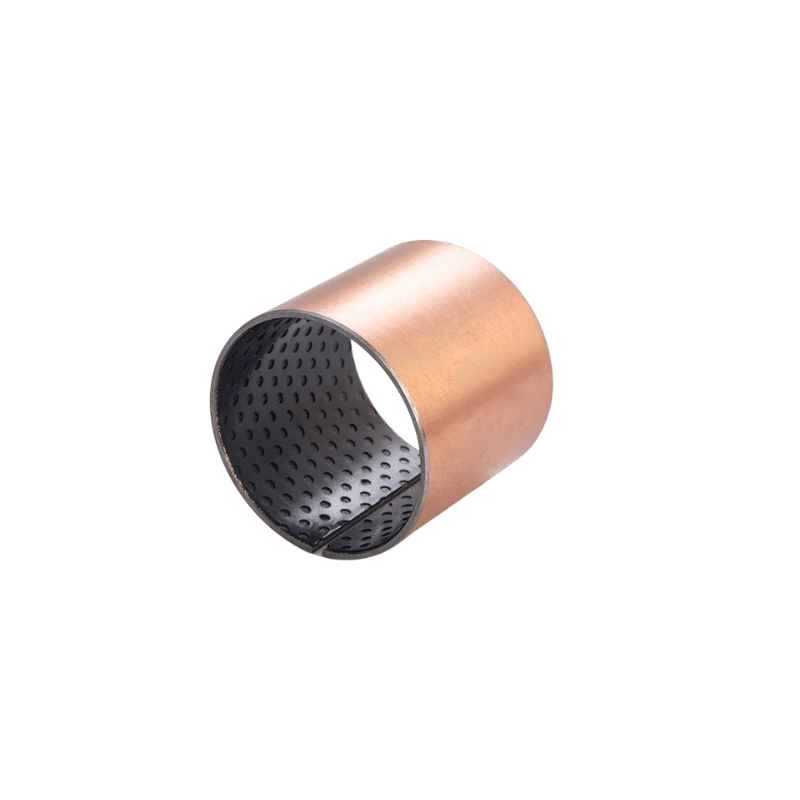


Plain bushings Designs and variants
Radial vs axial bearings, thrust washers, self-lubricating bearings, VIIPLUS solutions.
Upgrade your system’s efficiency – explore VIIPLUS bearings today! 🔩
Custom Plain Bearing, Ready for what’s next
Collaborating closely with our customers yields more than customized solutions. By deeply understanding various challenges, we can research new materials and component designs. Ongoing testing allows us to evaluate the performance of our tailor-made bearings. This enables us to analyze factors affecting performance, including environmental changes, different forces and friction, various materials and surfaces, and the use of lubricants.
Browse our Services for Custom Self-lubricating Bearings
Browse our Services for Custom Self-lubricating Bearings
Browse our Services for Custom Self-lubricating Bearings
Browse our Services for Custom Self-lubricating Bearings
Browse our Services for Custom Self-lubricating Bearings
