
Bearings vs. Bushings: Decoding the Differences for Optimal Performance
In the vast world of mechanical engineering and industrial applications, managing motion and reducing friction are paramount. Two fundamental components frequently employed for this purpose are bearings and bushings. While sometimes used interchangeably in casual conversation, they represent distinct solutions with unique designs, capabilities, and ideal use cases. Understanding their differences is crucial for selecting the right component to ensure efficiency, longevity, and reliability in your machinery.
This post dives deep into the world of bearings and bushings, clarifying their roles, highlighting their key differences, and exploring the diverse materials and designs available – particularly those expertly manufactured by specialists like VIIPLUS.COM.

Get Instant Quote
To get your instant quote, just send your drawings file and select your production process and material.
Place Order
After placing your order, production will start. You’ll receive regular status updates.
Receive Parts
We provide quality assurance, quality reports, and delivery tracking.
Our complete product range, Plain bushings bronze, maintenance-free, Customized plain bearings to deliver optimal performance
Our slide bearings at a glance.
What is a Bearing? The Essence of Rolling Motion
Generally, when engineers refer to “bearings,” they often mean rolling-element bearings. These are complex assemblies designed to dramatically reduce friction between moving parts by using rolling elements – typically balls or rollers (cylindrical, spherical, tapered, needle).
-
Mechanism: Bearings facilitate motion by allowing components to roll relative to each other, rather than slide.
-
Components: They consist of inner and outer rings (races), rolling elements, and often a cage to keep the elements spaced correctly.
-
Function: Primarily designed to handle significant loads (radial, axial, or a combination) at varying speeds, often requiring lubrication (grease or oil) to function optimally and prevent wear.
-
Friction: They replace high-friction sliding contact with lower-friction rolling contact.
What is a Bushing? The Simplicity of Sliding Contact
A bushing, often referred to as a plain bearing or sleeve bearing, offers a simpler approach. It’s essentially a sleeve, tube, or sometimes a flanged component that provides a bearing surface for rotary or linear motion.
-
Mechanism: Bushings work on the principle of sliding friction. One surface slides directly against the bushing material.
-
Components: Often a single piece, though sometimes split (like half-shell bearings) or featuring embedded lubricants. They lack rolling elements.
-
Function: Bushings act as a liner or direct contact point, reducing friction and wear between two parts. They typically excel in lower-speed, high-load scenarios, or where space is limited, or contamination is a concern.
-
Friction: They manage sliding friction, often relying on material properties or external/embedded lubrication.
Bearings vs. Bushings: A Head-to-Head Comparison
Understanding the core differences helps in making informed decisions. Let’s break it down:
| Feature | Rolling-Element Bearing | Bushing (Plain Bearing) | Key Takeaway |
| Mechanism | Rolling Contact (Balls/Rollers) | Sliding Contact (Direct Surface Interaction) | Fundamental difference in how motion occurs. |
| Friction | Lower starting & running friction | Higher starting friction, variable running friction | Bearings are generally more efficient friction-wise. |
| Components | Complex: Inner/Outer Races, Rolling Elements, Cage | Simple: Often a single sleeve or lined part | Bushings are structurally simpler. |
| Load Capacity | Varies greatly; can handle very high loads | Often better suited for high loads at low speeds, good shock absorption | Application dictates choice; bushings absorb shock well. |
| Speed | Generally suitable for higher speeds | Typically better for lower speeds | Bearings excel in high RPM applications. |
| Precision | Can offer very high rotational precision | Precision depends on tolerances & wear | Rolling bearings generally offer higher precision. |
| Lubrication | Usually requires grease or oil | Can be grease/oil lubed, self-lubricating, or dry running | Bushings offer more lubrication flexibility. |
| Contamination | More sensitive to dirt and debris | Generally more tolerant of contamination | Bushings often preferred in dirty environments. |
| Noise | Can generate more noise at high speeds | Typically quieter operation | Bushings can offer smoother, quieter movement. |
| Cost | Generally higher initial cost | Often lower initial cost | Bushings can be more cost-effective upfront. |
| Failure Mode | Can fail catastrophically if overloaded/contaminated | Often wears gradually | Bushing wear can sometimes be predicted. |
Deep Dive into Bushing Design and Materials
Bushings are far from monolithic. Their effectiveness hinges critically on their design and, most importantly, the material used. VIIPLUS.COM offers a comprehensive range, catering to diverse industrial needs:
1. Bushing Design:
-
Sleeve Bushings: The most common type – a simple cylindrical sleeve.
-
Flanged Bushings: Includes a flange at one end for axial location and bearing surface.
-
Split Bushings (Half Shell Bearings): Made in two halves, often used in applications like engine connecting rods where installation around a shaft is necessary. VIIPLUS provides these crucial HALF SHELL BUSH BEARINGS.
-
Washers (Thrust Washers): Flat, ring-shaped components designed to handle axial loads (thrust). VIIPLUS offers Dry Washers and other material options.
2. Bushing Materials – The Core of Performance:
The choice of material dictates a bushing’s load capacity, wear resistance, temperature tolerance, friction coefficient, and need for lubrication. VIIPLUS manufactures bushings from a variety of high-performance materials:
-
Bronze Alloys (e.g., Gun Metal, Phosphor Bronze, Aluminium Bronze):
-
Why: Excellent strength, wear resistance, and machinability. Good load-carrying capacity. Different alloys offer varying hardness and corrosion resistance. Phosphor bronze is known for fatigue resistance, while aluminium bronze offers high strength and corrosion resistance, especially in marine environments.
-
VIIPLUS: Offers various bronze alloys tailored to specific load and environmental needs.
-
-
Graphite Filled Bronze Bushes:
-
Why: These are “self-lubricating.” Graphite particles embedded within the bronze matrix provide continuous lubrication as the bushing wears, reducing the need for external grease or oil. Ideal for intermittent motion or hard-to-reach locations.
-
VIIPLUS: A key offering for maintenance-reduced applications.
-
-
Dry Bushes (Polymer/Composite):
-
Why: Made from engineered plastics (like PTFE, PEEK, Nylon) often reinforced with fibers (glass, carbon) or fillers. They operate without external lubrication (“dry running”). Excellent chemical resistance, low friction, and lightweight.
-
VIIPLUS: Provides Dry Bushes and Dry Washers for applications where lubrication is undesirable or impossible.
-
-
Bi-Metal Bushes (e.g., Steel Backed Bronze/Polymer):
-
Why: Combine the strength of a steel backing with the bearing properties of a bronze or polymer liner. Offers high load capacity and good heat dissipation. Half Shell Bearings often utilize this construction.
-
VIIPLUS: Supplies these robust solutions, including Half Shell variants.
-
Application Spotlight: Where Bushings Shine
While bearings are ubiquitous, bushings find critical applications in specific industries, often leveraging the material benefits offered by suppliers like VIIPLUS:
-
Material Handling Equipment: Pivot points on loaders, conveyors, and lifting mechanisms often use robust bronze or self-lubricating bushings due to high loads, potential shock, and exposure to contaminants.
-
Oil and Gas Industry: Corrosion-resistant bronze alloys (like Aluminium Bronze) or chemically inert polymer bushings are vital in pumps, valves, and drilling equipment exposed to harsh chemicals and environments.
-
Fertilizer Industry: Similar to Oil & Gas, chemical resistance is key. Dry bushings or specific bronze alloys handle corrosive substances found in processing equipment.
-
Petrochemical Industry: High temperatures and aggressive chemicals demand specialized materials. Polymer or specific metal alloy bushings ensure reliability in pumps, mixers, and reactors.
-
Other Applications: Automotive suspensions, agricultural machinery pivots, construction equipment joints, hydropower turbines – anywhere robust, simple, and reliable sliding motion is needed.
Partnering for Performance
Both rolling-element bearings and bushings (plain bearings) are essential mechanical components, but they serve different needs based on distinct operating principles. Bushings, with their elegant simplicity and material versatility, offer robust and often cost-effective solutions, particularly in challenging industrial environments.

Specializing in metal customized plain bearing solutions.
Plain bearings cylindrical, flanged, Manufacturing on Demand, Maintenance bound sliding bearings
Maintenance free sliding bearings, Cylindrical & Flange Bushings, maintenance free bushing, a versatile dry sliding bearing with PTFE sliding layer, Excellent sliding- and wear behaviour, for all types of movement, high load capacity, all-round adaptable.

Need help selecting the right bearing or bushing solution?
Understanding the nuances of load, speed, environment, and material properties is key to selecting the optimal component. For a wide range of high-quality bushings – from various bronze alloys and graphite-filled options to dry-running polymers and specialized half-shell bearings – partnering with an experienced manufacturer like VIIPLUS.COM ensures you get the right material and design for your specific application, maximizing performance and minimizing downtime.


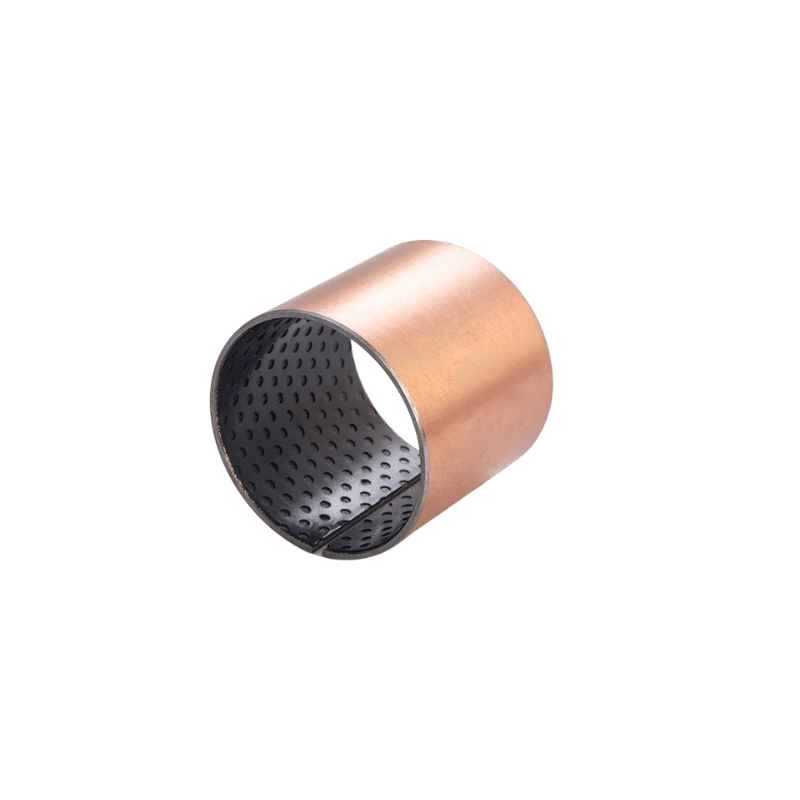


Explore the extensive range and expertise offered at VIIPLUS.COM.
Viiplus provides our global industrial, defense customers with unique design solutions. Coiled steel journal bearings are designed to meet industry standards for self-lubricating bushings. Manufacturers and suppliers of bearings, bushes, washers, graphite-filled bronze bushes, half-shell bearings, dry bushes, and plain bushes.
Custom Plain Bearing, Products Rolling and Plain Bearings,Plain Bearings and Bushing
Bearing and Bush Since the sliding layer has lubrication pockets, this initial lubrication is sufficient in most cases.
Browse our Services for Custom Self-lubricating Bearings
Browse our Services for Custom Self-lubricating Bearings
Browse our Services for Custom Self-lubricating Bearings
Browse our Services for Custom Self-lubricating Bearings
Browse our Services for Custom Self-lubricating Bearings
