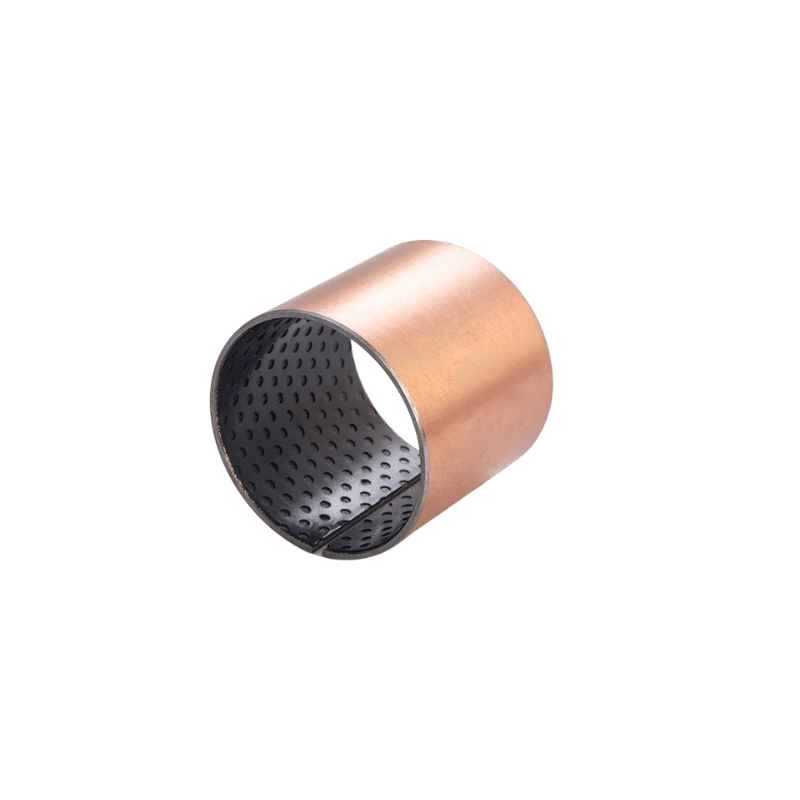
Customized Bearings, All plain bearings have built-in intelligence.

We thoroughly examine the intended final application of a product in order to design and create bearing solutions that are specifically customized to meet those requirements while ensuring high performance. Materials: Our adaptable materials are tailored to your specific needs. Through engineer-to-engineer collaboration, we research and test from concept to solution, delivering customized designs that solve challenges and enhance applications across all industries. Unique materials for smarter, more resilient systems.

Working engineer to engineer. Here are examples of custom parts and components we have manufactured to meet our customers’ specifications.

Self-Lubricating plain bushing bearing catalog
01.

Get Instant Quote

To get your instant quote, just send your drawings file and select your production process and material.

02.

Place Order

After placing your order, production will start. You’ll receive regular status updates.

03.

Receive Parts

We provide quality assurance, quality reports, and delivery tracking.

Our complete product range, Plain bushings bronze, maintenance-free, Customized plain bearings to deliver optimal performance

Our slide bearings at a glance.

Customized plain bearings Material to deliver optimal performance

Plain bearings materials are metal reinforced, self-lubricated with a layer of a low friction compound tape. Collaboration drives our engineered component solutions tailored to your challenges. We begin by analyzing your product or system’s end use to develop high-performance, custom plain bearing solutions. Key factors like temperature conditions, interference with mating components, and usage conditions significantly influence material selection. Customization Options and Specifications: Dimensional Customization and Special Designs.

PTFE composite bushings

Metal-Polymer Composite Self-lubricating Bushing Material

Steel Back + Porous Bronze Sinter + PTFE

POM composite bushings

Metal-Polymer Composite Bushing Material

Steel Back + Porous Bronze Sinter +

POM with Lubrication Indents

Wrapped bronze bushings

Bronze Bearings and Bronze Sleeve Bushings made of CuSn8 with Lubrication Indents or Lubricating Holes

Solid bronze bushings

Cast Bronze Bushings with Solid Lubricant Inserts, Glide plate bronze, maintenance-free

Metal & Bimetal Bearings

Bimetal Plain Bearings, Steel Backing and Leaded Bronze Overlay Steel + CuPb10Sn10 with indents

Special parts

Slide bearings and bronze bearings provide exceptional corrosion resistance, Bronze with graphite inserts.

BEARING BUSHES Plain Bearing

Specializing in metal customized plain bearing solutions.

Plain bearings Shape, cylindrical, Manufacturing on Demand

Each Customized Plain Bearing, Plain Bearing Cylindrical Bushing is tailored to fit its specific application, carefully considering factors like clearance or interference fit with mating components. Bearing shapes vary widely, featuring customized elements such as flanges, thrust washer, spherical, or conical forms to enhance overall performance.

Self-lubricating, maintenance-free and low-maintenance sliding bearing material

machined, and custom metal plain bushes for various industries. Metal/polymer composite plain bush, maintenance-freeMetric Imperial Size

plain bearing bushes

Custom plain bearings with unique features for enhanced performance and integrated intelligence.

Bearings enable smooth movement and reduce friction between interacting parts. Engineers can choose from two types: rolling bearings and customized plain bearings (bushings). While rolling bearings are more commonly used, plain bearings handle higher loads. Customized plain bearings come in various shapes. We emphasize features like flange designs, spherical self-lubricating bronze shapes, and hole configurations to optimize performance. Additionally, we consider the surface materials of mating components, environmental factors, temperature, and whether movement is linear or rotational.

Bushings, thrust washers and strips, Manufacturing on Demand

Have a search term for Materials & Services? Use our full-text search to quickly find relevant results and explore a wide range of manufacturing processes, materials, and finishes.

Self-Lubricating Technologies Solutions through insight

We are dedicated to solving your specific challenges. Our engineers expertly understand our materials’ properties and performance, including reducing torque from high loads or misalignment, tolerance compensation, corrosion resistance, and minimizing noise and vibration. This expertise enables us to deliver tailored, high-performance bearing solutions.

Self-Lubricating Technologies: Self-lubricating technologies play a crucial role in corrosion-resistant bearing design. viiplus’s Corrosion-Resistant Mounted Poly-Round Plain Bearings operate without lubrication, eliminating potential failure points where water ingress typically occurs. These bearings incorporate engineered polymer or ptfe plating coated and are available with housings in either stainless steel or metal polymer bearing materials, providing flexibility in design while maintaining consistent corrosion resistance.

Most plain bearings (bushings) feature a straightforward design using metal, polymer, or a metal-polymer mix. Our composite plain bearings are employed in numerous industries, particularly for heavy load applications.

Ultimate Guide to Custom Plain Bearing Bushings & Oilless Bearings: Materials, Types, and Applications

Meta Description: Explore the world of custom plain bearing bushings and oilless bearings. Learn about materials like steel-bronze-PTFE, stainless steel, bronze, and POM, along with their applications in industries like automotive, aerospace, and manufacturing.


Custom Plain Bearing Bushings & Oilless Bearings: Materials, Types, and Industrial Applications

Plain bearing bushings and oilless bearings are critical components in machinery, offering friction reduction, durability, and maintenance-free operation. Choosing the right material and type is essential for optimizing performance in demanding environments. In this guide, we break down the key materials, bushing types, and applications for custom solutions.


Key Materials for Custom Plain Bearing Bushings and Oilless Bearings

1. Steel + Bronze Powder + PTFE

  • Composition: Steel-backed with bronze powder and PTFE (polytetrafluoroethylene).
  • Benefits: Combines high load capacity (steel), wear resistance (bronze), and low friction (PTFE). Ideal for dry or low-lubrication environments.
  • Applications: Automotive suspensions, agricultural machinery, and hydraulic systems.

2. Stainless Steel

  • Grades: 304, 316, or custom alloys.
  • Benefits: Corrosion resistance, high-temperature tolerance, and hygienic properties.
  • Applications: Food processing, marine equipment, and chemical industries.

3. Bronze

  • Alloys: CuSn8P, CuSn6.5-0.1, CuZn31Si (H62–H68).
  • Benefits: Excellent thermal conductivity, wear resistance, and compatibility with shafts.
  • Applications: Heavy machinery, pumps, and construction equipment.

4. POM (Polyoxymethylene)

  • Features: High stiffness, low moisture absorption, and chemical resistance.
  • Applications: Conveyor systems, gears, and precision instruments.

Types of Custom Bushings and Their Material Compositions

1. Wrapped Bronze Bushings

  • Materials:
    • CuSn8P (QSn8-0.3)
    • CuSn6.5-0.1
    • CuZn31Si (H62–H68)
  • Advantages: Conformability, embeddability, and vibration damping.
  • Uses: Shock absorbers, engine components, and industrial gearboxes.

2. Bimetal Bearings

  • Material Combinations:
    • Steel + CuPb10Sn10 + Graphite
    • CuPb24Sn4, CuPb17Sn5, AlSn20Cu, AlZn5Si1.5Cu1Pb1Mg
  • Benefits: Layered structure for high load capacity (steel) and anti-seizure properties (soft overlay).
  • Applications: Crankshafts, turbine engines, and high-speed machinery.

3. Brass/Bronze Graphite Bearings

  • Alloys:
    • CuZn25Al5Mn4Fe3
    • CuSn12, CuAl10Fe5Ni5
    • CuSn5Pb5Zn5, CuSn6Zn6Pb3
  • Advantages: Self-lubricating (graphite plugs), corrosion resistance, and noise reduction.
  • Uses: HVAC systems, electric motors, and marine applications.

4. Steel Bushings

  • Materials:
    • SPCC, ST12 (cold-rolled steel)
    • 40Cr, 20#, 45# (carbon steel)
    • 20CrMnTi, 20CrMo, 42CrMo (alloy steel)
  • Benefits: High strength, heat treatability, and cost-effectiveness.
  • Applications: Automotive transmissions, industrial presses, and mining equipment.

Industrial Applications of Custom Oilless Bearings

1. Automotive

  • Use Cases: Suspension systems, steering columns, engine components.
  • Materials: Steel-bronze-PTFE, bimetal bearings.

2. Aerospace

  • Use Cases: Landing gear, actuators, turbine engines.
  • Materials: Stainless steel, CuAl10Ni5, AlSn12Si2.5Pb1.7.

3. Manufacturing & Heavy Machinery

  • Use Cases: Conveyors, hydraulic cylinders, CNC machines.
  • Materials: Bronze graphite bearings, POM bushings.

4. Marine & Offshore

  • Use Cases: Propeller shafts, pump systems.
  • Materials: CuAl10Fe5Ni5, stainless steel.

Why Choose Custom Bushings?

  • Tailored Performance: Match materials to load, speed, temperature, and corrosion requirements.
  • Cost Efficiency: Reduce downtime and maintenance costs with oilless, self-lubricating designs.
  • Versatility: Adapt to unique shapes, sizes, and industry standards.

Conclusion

Custom plain bearing bushings and oilless bearings are engineered to meet the precise demands of modern industries. By selecting the right material—whether steel-bronze-PTFE, stainless steel, or specialty bronze alloys—you can enhance equipment longevity and efficiency. Partner with a trusted manufacturer to design bushings tailored to your operational needs.

Keywords: Custom plain bearing bushings, oilless bearings, wrapped bronze bushings, bimetal bearings, steel bush materials, self-lubricating bearings, bronze graphite bushings.


Optimize your machinery today with precision-engineered bushings! Contact us for a consultation on custom solutions.

Linear bearings support and facilitate an object’s movement along straight or occasionally curved paths. They are essential for saving space and reducing weight across various industries, including automotive engineering, robotics, and consumer electronics.

Thrust bearings, also known as thrust washers, are essential in rotating assemblies for ensuring smooth movement between a shaft shoulder and a mating bearing. These flat, disk-shaped components enable rotational motion in high-load applications.

If a standard plain bearing isn’t sufficient, consider our solid polymer bearings. Their composite material offers low friction and wear, high chemical resistance, and built-in noise and vibration suppression.

In the world of mechanical engineering, slide bearing sleeve bushings are unsung heroes. These critical components reduce friction between moving parts, support radial or axial loads, and ensure smooth operation across a wide range of industries—from automotive and industrial machinery to marine engineering. Their durability, versatility, and cost-effectiveness make them a go-to solution for engineers looking to optimize system performance. In this ultimate guide, we’ll dive into the types of slide bearing sleeve bushings, material selection, design considerations, and maintenance best practices to help you maximize their efficiency and lifespan in your applications.

1. Types of Slide Bearing Sleeve Bushings and Material Selection
Slide bearing sleeve bushings come in various types, each defined by their material composition and suited to specific operational needs. Choosing the right material is key to balancing load capacity, environmental conditions, and maintenance requirements. Here’s a breakdown of the most common types:
  • Metallic Bushings
    • Materials: Carbon Steel, Alloy Steel, Corrosion-Resistant Steel
    • Applications: Heavy-load industrial machinery
    • Advantages: High strength and durability under extreme loads
  • Metal-Polymer Bushings
    • Materials: Carbon Steel with PTFE/Graphite coating
    • Applications: Corrosive or high-temperature environments
    • Advantages: Excellent resistance to wear and chemical exposure
  • Solid Bronze Bushings
    • Materials: CuSn12, CuZn25Al5
    • Applications: Marine and heavy-duty applications
    • Advantages: Superior corrosion resistance and load-bearing capacity
  • PTFE-Lined Bushings
    • Materials: Steel or Bronze with a PTFE layer
    • Applications: Maintenance-free systems
    • Advantages: Self-lubricating properties for reduced upkeep
When selecting a material, consider factors like load capacity, exposure to moisture or chemicals, and whether lubrication will be used. Matching the bushing type to your specific application ensures optimal performance and longevity.

2. Essential Design Considerations for Slide Bearing Sleeve Bushings
The design of a slide bearing sleeve bushing directly impacts its effectiveness and durability. Here are the key factors engineers must evaluate:
Length-to-Diameter Ratio (L/D)
The L/D ratio determines how well the bushing distributes loads and manages heat. A well-balanced ratio minimizes friction and extends service life. Typical recommendations include:
  • L/D < 1: Ideal for high-speed, low-load applications (e.g., small motors)
  • L/D = 1–2: Suitable for moderate loads and general-purpose machinery
  • L/D > 2: Best for heavy-load, low-speed systems (e.g., industrial presses)
Choosing the right L/D ratio prevents overheating and ensures consistent performance.
Wall Thickness Guidelines
Wall thickness varies by bushing type and diameter, affecting its ability to handle stress. While exact values depend on manufacturer specifications, here are general guidelines:
  • Solid Bronze: Thicker walls (e.g., 1–3 mm for ø10 mm, up to 10 mm for ø300 mm) for heavy-duty use
  • Wrapped Bushes: Thinner walls (e.g., 0.5–2 mm) for lighter applications
Proper wall thickness ensures the bushing can withstand operational loads without deforming or failing.

3. Installation Tips and Managing Thermal Expansion
Correct installation is critical to a bushing’s performance. One often-overlooked factor is thermal expansion, which occurs as systems heat up during operation. This can alter tolerances and alignment if not properly managed.
Thermal Expansion Coefficients
Different shaft materials expand at different rates. Here’s a quick reference:
  • Carbon Steel: ~12 µm/m·K
  • Stainless Steel: ~16 µm/m·K
  • Bronze: ~18 µm/m·K
For high-temperature applications, calculate these expansion rates to adjust tolerances. Additionally, using set screws or retaining compounds during installation can counteract stress relaxation as the system cools, keeping the bushing secure.

4. Lubrication and Maintenance Best Practices
Lubrication is the lifeblood of slide bearing sleeve bushings, reducing wear and extending lifespan. The lubrication needs vary by bushing type:
  • Metallic and Solid Bronze Bushings: Require regular grease or oil application
  • Metal-Polymer and PTFE-Lined Bushings: Often self-lubricating, but adding lubricant can enhance performance
Maintenance Tips:
  • Inspect Regularly: Check grease seals for contaminants like dust or water that could accelerate wear.
  • Reapply Lubricant: Follow a schedule based on operating conditions (e.g., monthly for heavy use).
  • Monitor Wear: Replace bushings showing signs of excessive friction or deformation.
Proactive maintenance prevents costly downtime and keeps systems running smoothly.

Conclusion
Slide bearing sleeve bushings are indispensable for reducing friction and supporting loads in mechanical systems. Whether you opt for metallic, metal-polymer, solid bronze, or PTFE-lined bushings, your choice should align with your application’s load demands, environmental conditions, and maintenance capabilities. Thoughtful design—considering L/D ratios, wall thickness, and thermal expansion—combined with proper installation and lubrication practices, ensures these components deliver reliable, long-term performance.
For the best results, always refer to manufacturer guidelines tailored to your specific bushing and application. By mastering the intricacies of slide bearing sleeve bushings, you can enhance system efficiency, minimize downtime, and keep your operations running at peak performance.
  • POM Bearing

    Boost Efficiency with Oilless Bushings: Explore our high-quality, durable, maintenance-free Oilless Bushings for your industrial needs. Visit us now for premium solutions!

  • ptfe bearing

    Boost Efficiency with Oilless Bushings: Explore our high-quality, durable, maintenance-free Oilless Bushings for your industrial needs. Visit us now for premium solutions!

  • Metal-Polymer Composite Bushing Material

    Boost Efficiency with Oilless Bushings: Explore our high-quality, durable, maintenance-free Oilless Bushings for your industrial needs. Visit us now for premium solutions!

  • Metal-Polymer Plain Bearings Grease Lubricated

    Boost Efficiency with Oilless Bushings: Explore our high-quality, durable, maintenance-free Oilless Bushings for your industrial needs. Visit us now for premium solutions!

  • POM Sleeve Bearings

    Boost Efficiency with Oilless Bushings: Explore our high-quality, durable, maintenance-free Oilless Bushings for your industrial needs. Visit us now for premium solutions!

  • PTFE Fabric Bearings

    Boost Efficiency with Oilless Bushings: Explore our high-quality, durable, maintenance-free Oilless Bushings for your industrial needs. Visit us now for premium solutions!

  • Hydraulic Bushing

    Boost Efficiency with Oilless Bushings: Explore our high-quality, durable, maintenance-free Oilless Bushings for your industrial needs. Visit us now for premium solutions!

  • Stainless Steel Corrosion-Resistant Bearings

    Boost Efficiency with Oilless Bushings: Explore our high-quality, durable, maintenance-free Oilless Bushings for your industrial needs. Visit us now for premium solutions!

  • Metal-Polymer Bronze Backed PTFE Plain Bearing

    Boost Efficiency with Oilless Bushings: Explore our high-quality, durable, maintenance-free Oilless Bushings for your industrial needs. Visit us now for premium solutions!

Plain bushings Designs and variants

Most plain bearings have a simple design, molded from metal and/or plastic. Some are more complex, featuring a metal carrier with a polymer layer. Sleeve bearings are simple, cost-effective solutions for low-to-moderate loads. Plastic bushings may need upgrading in demanding conditions (high load, temperature, corrosion). Tribology underpins bearing design, ensuring efficiency and durability.
Corrosion-resistant bearings leverage specialized materials to thrive in harsh environments. Tailor your choice to operational needs: simplicity vs. performance, cost vs. longevity!

Plain bearings, also known as sliding or sleeve bearings, are designed to reduce friction between moving parts through sliding contact, unlike rolling-element bearings (e.g., ball or roller bearings). Their simplicity and versatility make them suitable for diverse applications. They are broadly categorized into two types based on design complexity:

1. Simple Plain Bearings

  • Design & Materials: These are typically single-component bearings made from a single material, such as metal (bronze, brass, or aluminum) or polymer (PTFE, nylon, UHMWPE). They are often shaped into sleeves, bushings, or thrust washers.
  • Functionality: Ideal for low-to-moderate loads and speeds, they rely on the inherent lubricity of the material or external lubrication to minimize friction.
  • Applications: Common in household items (hinges, door handles), small motors, agricultural machinery, and low-stress industrial equipment.
  • Advantages: Cost-effective, lightweight, and easy to manufacture. Polymers offer corrosion resistance and silent operation.

2. Complex Plain Bearings

  • Design & Materials: These combine a rigid metal carrier (steel, aluminum) with a polymer layer (POM, PTFE composites, or lubricant-impregnated materials). The metal provides structural strength, while the polymer reduces friction and wear.
  • Functionality: The layered design balances load capacity (from the metal) with low friction and wear resistance (from the polymer). Some include self-lubricating features via embedded lubricants or porous surfaces.
  • Applications: Used in high-performance settings like automotive components (suspensions, transmissions), hydraulic systems, and heavy machinery.
  • Advantages: Handle higher loads and speeds than simple bearings, resist corrosion, and require minimal maintenance.

Key Considerations:

  • Lubrication: Simple bearings may need periodic lubrication, while complex ones often integrate self-lubricating materials.
  • Durability: Metal-backed polymer bearings excel in harsh environments (high temperatures, contaminants).
  • Trade-offs: Plain bearings generally have higher startup friction than rolling-element bearings but better shock load tolerance and compact design.

In summary, plain bearings offer adaptable solutions across industries, with simple designs prioritizing cost and ease, and complex designs delivering enhanced performance for demanding applications.

A GUIDE TO BEARINGS AND BUSHINGS
Bearings and bushings are critical components in machinery, enabling smooth motion and reducing friction.

  • Bearings: Devices that support rotational or linear movement, distributing loads and minimizing wear. Types include rolling-element (ball, roller) and plain bearings (sleeve, journal).
  • Bushings: A subtype of plain bearings, often cylindrical (sleeve-shaped), used to constrain, guide, or reduce friction in rotating or sliding assemblies.
  • Key Differences: Bushings are simpler, typically single-part components, while bearings may involve complex assemblies (e.g., cages, rolling elements).

WHAT IS A SLEEVE BEARING?
A sleeve bearing (or journal bearing) is a cylindrical, sleeve-like component that supports rotating shafts.

  • Design: Simplest type of plain bearing, often made from metal (bronze, brass) or polymer (PTFE, nylon).
  • Function: Provides a sliding surface between a shaft and its housing, relying on lubrication (oil, grease, or self-lubricating materials) to reduce friction.
  • Applications: Electric motors, pumps, fans, and appliances.
  • Advantages: Quiet operation, low cost, and compact design.

5 REASONS TO REPLACE PLASTIC BUSHINGS

  1. Excessive Wear: Plastic bushings degrade under high loads or continuous use, leading to play or misalignment.
  2. Temperature Limitations: Plastics (e.g., nylon) soften at high temps or become brittle in cold environments.
  3. Load Capacity: Metal or composite bushings (e.g., bronze-PTFE) handle heavier loads without deformation.
  4. Friction and Lubrication: Self-lubricating metal-polymer composites reduce maintenance vs. plastic, which may require frequent re-greasing.
  5. Chemical Resistance: In corrosive environments (e.g., chemicals, saltwater), stainless steel or specialty polymer bushings outperform standard plastics.

WHAT IS TRIBOLOGY?
Tribology is the science of interacting surfaces in relative motion, focusing on:

  • Friction: Resistance to motion between surfaces.
  • Wear: Material loss due to mechanical or chemical action.
  • Lubrication: Use of fluids or materials to minimize friction/wear.
  • Relevance to Bearings: Tribology guides material selection (e.g., low-friction polymers), lubrication strategies, and surface treatments (coatings, textures) to optimize bearing performance and lifespan.

CORROSION RESISTANT BEARINGS
Bearings designed to withstand corrosive environments (e.g., marine, chemical processing, food industry):

  • Materials:
    • Stainless Steel: Resists rust and chemicals but may require lubrication.
    • Plastics (PTFE, PEEK): Immune to corrosion and ideal for wet/chemical exposure.
    • Ceramics: Inert, high-hardness options for extreme conditions.
    • Coatings: Zinc-nickel or polymer coatings protect metal bearings.
  • Applications:
    • Offshore equipment, water pumps, pharmaceutical machinery.
Graphite Plugged Bronze Bushings
Centrifugal Casting Bronze
Sliding Bearing Design

Custom Plain Bearing, Ready for what’s next

Collaborating closely with our customers yields more than customized solutions. By deeply understanding various challenges, we can research new materials and component designs. Ongoing testing allows us to evaluate the performance of our tailor-made bearings. This enables us to analyze factors affecting performance, including environmental changes, different forces and friction, various materials and surfaces, and the use of lubricants.

Bearings
Hoist Bearings
Trunnion Bearings
Bushings
Cam Bushings
Guide Bushings for Rams
Linkage Bushings
Propeller Bushings
Wrist Pin Bushings
Shaft Sleeves
Thrust Plates
Thrust Washers
Toggle Guides
Wear Rings
Valve Bushes
Impellers