
Sliding vs. Rolling Bearings: A Comprehensive Performance Comparison
Bearings are the unsung heroes of countless machines and systems, enabling smooth motion and supporting loads. Choosing the right bearing is critical for performance, longevity, and efficiency. While many types exist, the two primary categories are Sliding Bearings (also known as plain bearings) and Rolling Bearings (also known as anti-friction bearings).

Get Instant Quote
To get your instant quote, just send your drawings file and select your production process and material.
Place Order
After placing your order, production will start. You’ll receive regular status updates.
Receive Parts
We provide quality assurance, quality reports, and delivery tracking.
Our complete product range, Plain bushings bronze, maintenance-free, Customized plain bearings to deliver optimal performance
Our slide bearings at a glance.
Detailed Performance Comparison: Sliding vs. Rolling Bearings
Based on a standard comparison framework, here’s how the types differ:
| Characteristic | Sliding Bearing (Self-Lubricating) | Sliding Bearing (General) | Rolling Bearing |
| Load Capacity | High | High | Low (relative to size/type, can be High for specific types) |
| Speed | Low or Medium | Low or Medium | High, Medium-High speed motion |
| Friction Coefficient | Small | Large | Very Small |
| Rotational Accuracy | General | High | High |
| Lifespan | Depends on Material Wear Resistance | Depends on Number of Starts | Depends on Fatigue Wear |
| Noise | Almost No Noise during operation | Almost No Noise during operation | Generates noise during operation |
| Lubrication | Optional/Integrated | Required | Required |
| Sealing | Optional | Required | Required |
| Corrosion Resistance | Good | Good | Not Good |
| Impact Resistance | Good | Good | Not Good |
| Application Suitability | Flexible for various motions | Flexible for various motions | Often optimized for single motion type |
| Shaft Requirements | Low requirement for shaft hardness | Low requirement for shaft hardness | Requires higher shaft hardness, needs heat treatment |
| Customization (Non-Std) | Flexible | Flexible | Troublesome, higher cost |
| Sensitivity to Errors | Not Sensitive | Sensitive | Sensitive |
| Maintenance | Less Maintenance | Frequent Maintenance | Regular Maintenance |
| Cost (Economic Aspect) | Lowest Cost | Higher Cost | Lower Cost |
Let’s elaborate on some of the most significant differences:
-
Load Capacity: Sliding bearings, especially general plain bearings, often have a larger contact area relative to their size compared to rolling bearings. This distributed contact allows them to handle very high static and dynamic loads, particularly in harsh environments or with shock loads. While rolling bearings can also handle high loads (e.g., roller bearings), the load is concentrated on the rolling elements and raceways, making them more susceptible to damage from shock.
-
Speed & Friction: This is a major differentiator. Sliding bearings operate with higher friction (especially general types requiring external lubrication) due to the inherent sliding contact. This friction generates heat, limiting their practical operating speed. Rolling bearings, leveraging rolling contact, have significantly lower friction. This translates to less heat generation, higher efficiency, and the ability to operate at much higher speeds. Self-lubricating sliding bearings reduce friction compared to dry sliding but are still generally limited to lower speeds than comparable rolling bearings.
-
Precision: Rolling bearings, particularly high-precision types, excel in applications requiring very accurate rotational positioning and minimal runout. The precise geometry of the rolling elements and raceways allows for tight tolerances. While some hydrostatic or hydrodynamic sliding bearings can achieve very high precision by maintaining a stable fluid film, standard self-lubricating or boundary-lubricated sliding bearings typically offer only general accuracy.
-
Lifespan: The failure modes differ. Sliding bearing lifespan is often determined by wear of the bearing material, especially in applications with frequent starts/stops or inadequate lubrication. Self-lubricating types depend heavily on the wear resistance of the composite material. Rolling bearing lifespan is primarily determined by fatigue failure of the raceways or rolling elements under cyclic stress. Proper lubrication is crucial for both types, but for different reasons (wear reduction for sliding, fatigue prevention and friction reduction for rolling).
-
Maintenance & Lubrication: General sliding bearings require regular, often frequent, lubrication to maintain the necessary film and prevent wear. This adds to maintenance costs and can be challenging in inaccessible locations or clean environments. Self-lubricating sliding bearings dramatically reduce or eliminate the need for external lubrication, making them ideal for maintenance-free applications. Rolling bearings require periodic lubrication (greasing or oiling) to reduce friction, prevent wear, and protect against corrosion, falling somewhere in between in terms of maintenance frequency depending on the application and sealing.
-
Environmental Factors (Noise, Corrosion, Impact): Sliding bearings are generally quieter than rolling bearings as they lack the rolling elements and cages that can generate noise and vibration, especially at higher speeds. Sliding bearings often handle corrosive environments better, particularly if made from resistant materials like plastics or certain bronzes, and their robust solid structure makes them more tolerant of shock and vibration compared to the precision components of rolling bearings which can be brinelled or damaged by impacts.
-
Shaft Requirements: Rolling bearings exert high contact pressures at the points/lines of contact with the shaft (inner ring). To prevent damage and ensure longevity, the shaft surface in contact with a rolling bearing typically needs high hardness, often achieved through heat treatment. Sliding bearings distribute the load over a larger area, resulting in lower contact pressure, thus requiring less stringent shaft hardness – often a simple machined surface is sufficient, which simplifies manufacturing and reduces cost.
-
Cost & Customization: Simple self-lubricating sliding bushings are often the most cost-effective bearing solution, especially in high-volume applications. While general sliding bearings can be inexpensive parts, the overall system cost (including lubrication systems, maintenance) can increase. Rolling bearings have a moderate cost, often lower system cost than general sliding but higher than self-lubricating for basic applications. For non-standard sizes, sliding bearings (like cast bronze or plastic) are generally easier and cheaper to customize than rolling bearings, which require specialized tooling for rings and rolling elements.
Choosing the Right Bearing
The optimal choice between sliding and rolling bearings is a trade-off based on the specific demands of the application:
-
Choose Sliding Bearings when:
-
High static or shock loads are present.
-
Space is limited.
-
Cost is a primary concern (especially self-lubricating types).
-
Maintenance needs to be minimal or lubrication is difficult.
-
Low noise or vibration is critical.
-
The environment is dirty or corrosive.
-
Shaft hardness needs to be kept low.
-
Custom sizes are frequently needed.
-
-
Choose Rolling Bearings when:
-
Low friction and high efficiency are paramount.
-
High operating speeds are required.
-
High rotational accuracy is needed.
-
Standardization and interchangeability of parts are important (though application suitability can overlap).
-
Lifespan is primarily limited by fatigue under clean conditions.
-
How They Work – A Quick Primer
Sliding Bearings: These rely on direct contact between two surfaces, often separated by a thin film of lubricant. They can be simple bushings or more complex hydrostatic/hydrodynamic designs.
Rolling Bearings: These use rolling elements (balls, rollers, needles) placed between an inner and outer ring. Motion is achieved by the rolling of these elements, significantly reducing friction compared to sliding contact.

Specializing in metal customized plain bearing solutions.
Plain bearings cylindrical, flanged, Manufacturing on Demand, Maintenance bound sliding bearings
Sliding and rolling bearings each possess distinct advantages and disadvantages. Sliding bearings, particularly self-lubricating variants, offer robustness against load and environment, low noise, and cost-effectiveness, albeit typically limited by speed and accuracy compared to their rolling counterparts. Rolling bearings, conversely, provide high speed capabilities, low friction, and high precision but can be sensitive to contamination, shock loads, and require more robust shaft surfaces.

Custom self-lubricating bearing, Maintenance free sliding bearings
A thorough understanding of these performance characteristics, as highlighted in the comparison above, is essential for engineers and designers to select the bearing type that best meets the specific technical and economic requirements of their application, ensuring reliable and efficient operation.
Diving Deeper: Key Advantages of Self-Lubricating Bearings
In summary, self-lubricating bearings offer a compelling combination of high load capacity due to stress distribution, smooth low-speed operation free from stick-slip, shaft protection via a transfer film, and relaxed requirements for shaft material properties. These characteristics make them an excellent choice for numerous applications where maintenance-free operation, robustness, and cost-effectiveness are key considerations.




The Self-Lubricating Bearing Industry: Materials, Markets, and Future Potential
Viiplus provides our global industrial, defense customers with unique design solutions. Coiled steel journal bearings are designed to meet industry standards for self-lubricating bushings. Manufacturers and suppliers of bearings, bushes, washers, graphite-filled bronze bushes, half-shell bearings, dry bushes, and plain bushes.
Custom Plain Bearing, Products Rolling and Plain Bearings,Plain Bearings and Bushing
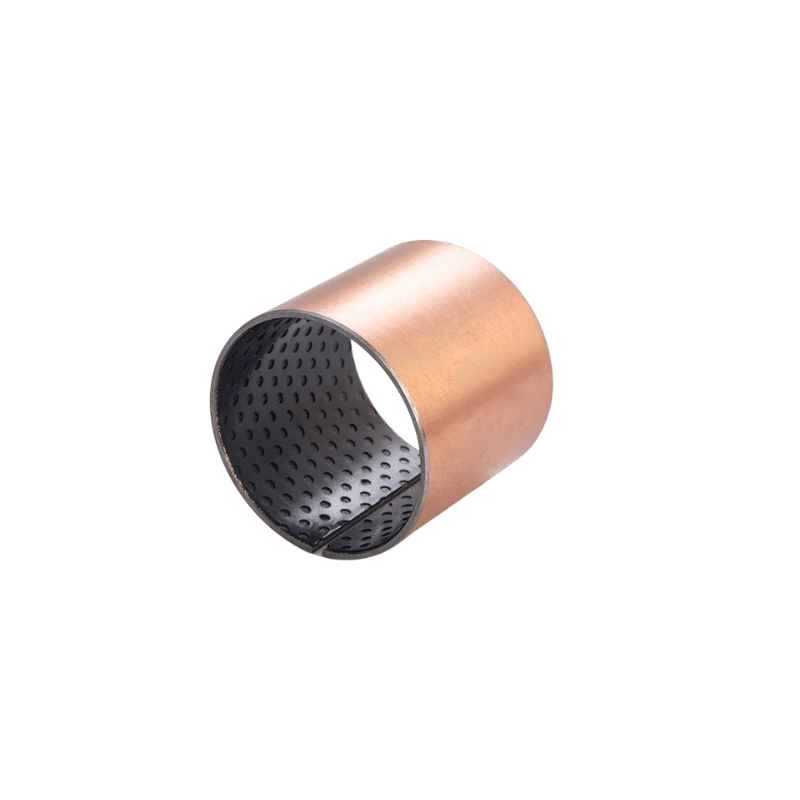
Bearing and Bush Since the sliding layer has lubrication pockets, this initial lubrication is sufficient in most cases.
Browse our Services for Custom Self-lubricating Bearings
Browse our Services for Custom Self-lubricating Bearings
Browse our Services for Custom Self-lubricating Bearings
Browse our Services for Custom Self-lubricating Bearings
Browse our Services for Custom Self-lubricating Bearings
