
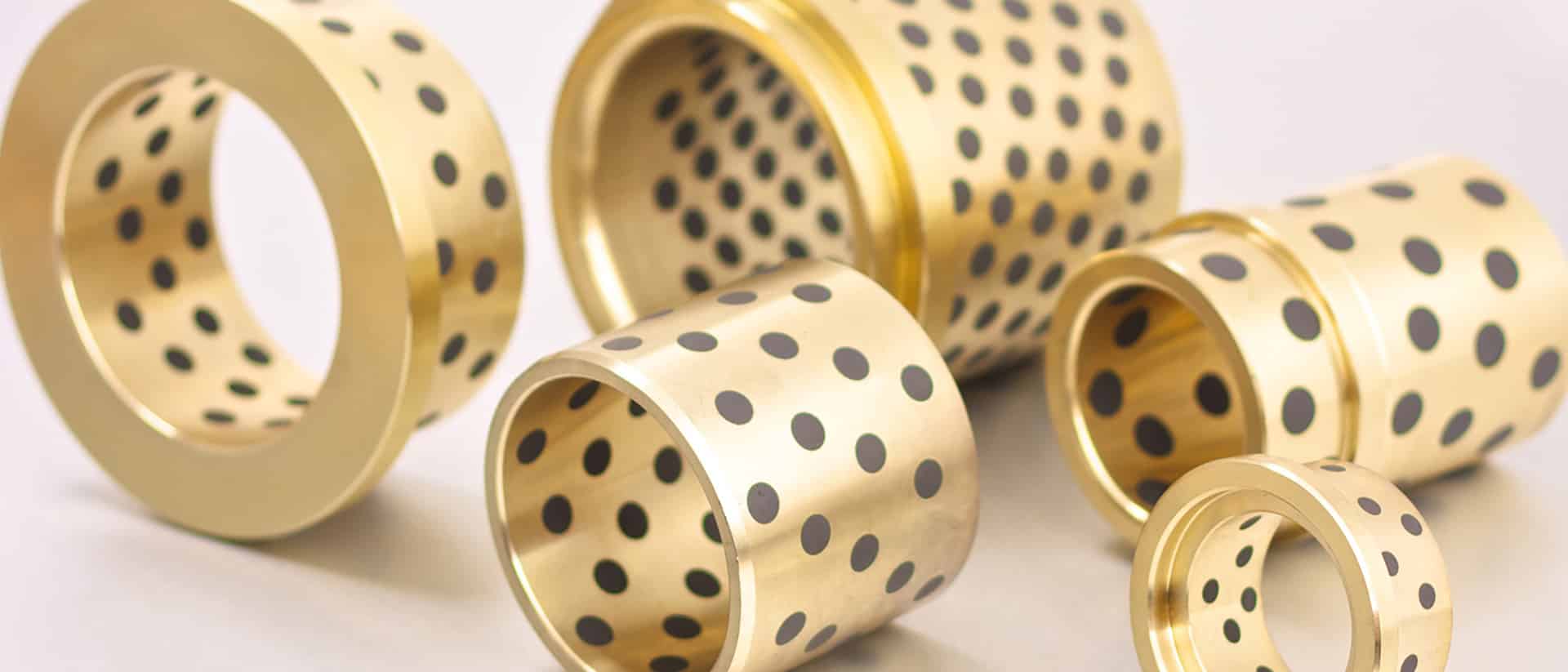
Special Brass Bushing: ZCuZn25Al6Fe3Mn3 Self-Lubricating Wear-Resistant Copper Sleeve
Maintenance-free Plain Bearings

Technology Drawing, Simply upload your file, and select your desired production process and material to receive an instant quote.

Once your order is placed, production will commence. You will receive regular updates on the status of your order.

We ensure quality assurance, provide detailed material reports, and offer delivery tracking.
Engineered & Machined Bronze and Brass Bushings, Manganese bronze alloys, such as C863- Sleeve & Flange More
In the world of industrial machinery, the efficiency and longevity of components are pivotal. The special brass bushing, made from ZCuZn25Al6Fe3Mn3, epitomizes innovation in self-lubricating wear-resistant technology, offering a robust solution for demanding applications.
High strength brass is a versatile product suitable for use under various conditions, including high/low pressure and temperature, and with or without oil or water lubrication. This material is twice as hard and more than twice as wear-resistant as ordinary copper sleeves, making it ideal for applications such as continuous casting machines, rolling mills, and conveyors in the metallurgical industry. It is also used in injection molding machine mechanisms, extrusion systems, high voltage switches, construction machinery supports, and water conservancy parts like arc door supports, pulleys, and drive wheels. Additionally, it is applied in paper machine drying tracks, automobile molds, and ship anchor sliding parts.

Tin bronzes, also known as red bronzes or leaded gunmetal, are highly sought after for their exceptional hardness, machinability, and resistance properties. We provide a diverse selection of tin bronzes that meet international standards.

Leaded bronzes are highly valued for their excellent corrosion resistance and superior operational properties. These alloys, often referred to as leaded tin bronzes, are composed primarily of copper, tin, and lead. The addition of lead enhances the machinability and self-lubricating properties of the alloy, making it ideal for applications where lubrication is challenging or impossible.


High tensile brasses are specialized alloys that combine the base metals of copper and zinc with small percentages of other elements to enhance their overall properties. These alloys offer a unique blend of strength, corrosion resistance, and machinability, making them valuable in various industrial applications.


C93200: Leaded Tin Bronze, used in bearings and bushings. C93200 (SAE 660): Leaded Tin Bronze, known for good wear resistance and machinability.

C95400: Aluminum Bronze, known for its high strength and corrosion resistance. We manufacture self-lubricating bronze bearings based on clients’ specifications and drawings.

Manufacturer of bronze and self lubricating bronze parts according to client’s drawing. We offer a wide range of geometrical shapes and sizes to meet various requirements.

Machined Bronze & Brass Components Structure and Design
The simplicity of the special brass bushing’s design belies its sophisticated functionality. At its core, the bushing utilizes a high-strength brass base, typically made from ZCuZn25Al6Fe3Mn3, into which holes are meticulously drilled. These holes are then filled with a solid lubricant, embedding the potential for self-lubrication directly into the structure of the bushing.
Alternative materials such as Tin Bronze 555, Tin Bronze 10-1, Aluminum Bronze 9-4, Nickel-Aluminum Bronze 9-4-4-2, and Aluminum Bronze 10-3 can also be used to tailor the bushing to specific operational needs.
Properties and Benefits
The primary attribute of this special brass bushing is its self-lubricating, maintenance-free nature. The high-strength copper alloy serves as the foundation, providing exceptional load-bearing capacity. Meanwhile, the solid lubricant embedded within reduces friction and wear, enhancing the bushing’s performance under dry running conditions.
A pre-lubricated film designed on the bearing surface plays a crucial role. It swiftly transfers the solid lubricant to the mating parts, establishing an effective lubrication film that significantly reduces startup friction and wear.


Applications of brass Bushings
This bushing is particularly suited for applications characterized by low speed and high load. Its robust construction and self-lubricating design make it an ideal choice for environments where maintenance is difficult or where lubrication would contaminate the process.
Advantages special brass bushing, ZCuZn25Al6Fe3Mn3
Self-Lubricating: Eliminates the need for additional lubrication, reducing maintenance requirements and operating costs.
Wear Resistance: Engineered to withstand severe conditions, prolonging the operational lifespan of both the bushing and the machinery it serves.
Low Noise Operation: Provides a quieter solution, essential in noise-sensitive applications.
High Strength and Durability: Ensures reliability and safety in high-load applications, supporting extended service intervals.


Machining Special Brass Bushing: ZCuZn25Al6Fe3Mn3 Self-Lubricating Wear-Resistant bronze Bearing materials
The special brass bushing, ZCuZn25Al6Fe3Mn3, represents a significant advancement in bearing technology. Its innovative design not only meets the rigorous demands of modern industrial applications but also offers an environmentally friendly solution by eliminating the need for fluid lubricants. For industries ranging from mining to manufacturing, this bushing stands out as a smart choice for enhancing operational efficiency and reducing ecological impact.
The ZCuZn25Al6Fe3Mn3 cast copper alloy offers excellent mechanical properties and good casting performance. It exhibits good corrosion resistance in air, freshwater, and seawater and is weldable. Common applications include small bearings, graphite copper bushings, copper plates, and large copper bushings. This material not only reduces raw material consumption but also provides high performance.
Properties and Applications: ZCuZn25Al6Fe3Mn3 cast copper alloy is used for high-strength, wear-resistant parts, such as bridge bearing plates, nuts, bolts, wear plates, slide blocks, and worm gears.
Chemical Composition:
- Copper (Cu): 60.0–66.0%
- Tin (Sn): ≤0.2% (impurities)
- Zinc (Zn): remainder
- Lead (Pb): ≤0.2% (impurities)
- Nickel (Ni): ≤3.0% (not included in the total impurities)
- Aluminum (Al): 4.5–7.0%
- Iron (Fe): 2.0–4.0%
- Manganese (Mn): 2.0–4.0%
- Silicon (Si): ≤0.10% (impurities)
Note: Total impurities ≤2.0%
Mechanical Properties:
| Casting Method | Sand Casting | Centrifugal Casting | Continuous Casting | Metal Mold Casting |
|---|---|---|---|---|
| Tensile Strength σb (MPa) | 725 | 740 | 740 | 740 |
| Yield Strength σ (MPa) | 400 | 400 | 400 | 400 |
| Elongation δ5 (%) | 10 | 7 | 7 | 7 |
| Hardness | 160 | 170 | 170 | 170 |
(Note: The previous GB/T 1176-1987 mechanical property data may vary slightly, where the Brinell hardness was 1500HB.)
Heat Treatment Specifications:
- Heating Temperature: 1080–1120°C
- Pouring Temperature: 1000–1050°C
Casting Methods:
- Sand casting
- Centrifugal casting
- Continuous casting
- Metal mold casting
Material Varieties in Self-Lubricating Bronze Bearings and Their Properties
Common Bearing Damage Types and Their Characteristics
High-quality bearings can last a long time under proper use. However, premature damage is often due to incorrect selection, improper use, or inadequate lubrication. It is crucial to document the machine type, installation site, operating conditions, and surrounding components during bearing installation. By analyzing and summarizing the types of bearing damage and the conditions under which they occur, similar issues can be prevented in the future.
Here are eleven common forms of bearing damage:
-
Spalling: This occurs when the running surfaces peel off, leaving a noticeable rough and uneven surface.
-
Burning: Bearings overheat and discolor, recognized to seizure and inability to rotate.
-
Cracking and Flaws: Partial notches with cracks are visible, indicating structural failures.
-
Cage Damage: Rivets may loosen or break, causing the cage to fracture.
-
Scratching and Jamming: Surfaces become rough with minor welding; the scraping of the ring’s edge against the roller end is referred to as jamming.
-
Rusting and Corrosion: Parts of or the entire surface rusts, often showing a patterned corrosion similar to the spacing of the rolling elements.
-
Abrasion: Contact surfaces show rust-colored wear particles.
-
Wear: Surface wear alters dimensions, often accompanied by scuffing and abrasion marks.
-
Electrical Erosion: Rolling surfaces exhibit spark crater-like indentations, which may develop into wave-like patterns.
-
Indentation and Impact Damage: Solid particles getting caught or impacts during handling cause surface indentations and scratches during installation.
-
Creep: Slippage on the inner or outer diameter leads to polishing or discoloration, sometimes causing the bearing to seize.
Understanding these damage types helps in diagnosing issues and implementing better maintenance strategies to extend the life of bearings.
| Cast Bronze Bearing Alloys Specifications | |||||
| ALLOY | ASTM | SAE | AMS | MIL | FED |
| C90300 | B271 | J461, | C-15345,ALLOY 8 | QQ-C-390 | |
| B505 | J462 | C-22087 | |||
| B584 | (formerly 620) | C-11866,COMP.26 | |||
| C-22229 | |||||
| C90500 | B271 | J461, | 4845 | QQ-C-390 | |
| B505 | J462 | ||||
| B22 | (formerly 62) | ||||
| B584 | |||||
| C90700 | B505 | J461, | QQ-C-390 | ||
| J462 | |||||
| (formerly 65) | |||||
| C92200 | B271 | J461, | C-15345,ALLOY 9 | QQ-C-390 | |
| B505 | J462 | B-16541 | |||
| B61 | (formerly 622) | ||||
| B584 | |||||
| C92300 | B271 | J461, | C-15345,ALLOY 10 | QQ-C-390 | |
| B505 | J462 | B-16540 | |||
| B584 | (formerly 621) | ||||
| C92700 | B271 | J461, | QQ-C-390 | ||
| B505 | J462 | ||||
| (formerly 63) | |||||
| C93200 | B271 | J461, | C-15.12,ALLOY 12 | QQ-C-390 | |
| B505 | J462 | ||||
| B22 | (formerly 660) | ||||
| B584 | |||||
| C93400 | B505 | C-15345,ALLOY 11 | QQ-C-390 | ||
| C-22087 | |||||
| C-22229 | |||||
| C93500 | B271 | J461, | QQ-C-390 | ||
| B505 | J462 | ||||
| B584 | (formerly 66) | ||||
| C93700 | B271 | J461, | 4827 | QQ-C-390 | |
| B505 | J462 | 4842 | |||
| B22 | 792 | ||||
| B584 | (formerly 64) | ||||
| C93800 | B271 | J461, | QQ-C-390 | ||
| B505 | J462 | ||||
| B66 | (formerly 67) | ||||
| B584 | |||||
| C94300 | B271 | J461, | 4840 | QQ-C-390 | |
| B505 | J462 | ||||
| B66 | |||||
| B584 | |||||
| C95300 | B271 | J461, | C-11866,COMP.22 | QQ-C-390 | |
| C95300HT | B505 | J462 | |||
| B148 | (formerly 688) | ||||
| C95400 | B271 | J461, | 4870 | C-15345,ALLOY 13 | QQ-C-390 |
| C95400HT | B505 | J462 | 4871 | C-11866,COMP.23 | |
| B148 | 4872 | ||||
| 4873 | |||||
| C95500 | B271 | J461, | C-15345,ALLOY 14 | QQ-C-390 | |
| C95500HT | B505 | J462 | C-22087 | ||
| B148 | B-21230 | ||||
| C-22229 | |||||
| C86300 | B271 | J461, | 4862 | C-15345,ALLOY 6 | QQ-C-390 |
| B505 | J462 | C-22087 | |||
| B22 | C-11866,COMP 21 | ||||
| B584 | C-22229 | ||||
| C86400 | B271 | QQ-C-390 | |||
| B505 | |||||
| B584 | |||||
| Material | Characteristics |
|---|---|
| Bronze | Offers high corrosion resistance and a relatively low friction coefficient in seawater. Known for excellent pressure resistance, abrasion resistance, machinability, and mechanical properties. |
| Phosphor Bronze | Features excellent corrosion resistance, abrasion resistance, and high hardness. Commonly used for machine parts such as rollers, gears, and worm gears. |
| Lead Bronze | Ideal for applications involving soft shafts and high contact pressure. Exhibits excellent pressure resistance and abrasion resistance. |
| High Strength Brass | Suitable for low to medium speeds under high load conditions. Known for high strength, hardness, and excellent corrosion and abrasion resistance, especially under high load. |
| Aluminum Bronze | Ideal for high-temperature applications and repetitive loading. Characterized by high strength, toughness, corrosion resistance, and heat resistance. |


