
How to judge whether sliding bearings need to be replaced
How to judge whether sliding bearings need to be replaced
High-Performance Self-Lubricating Bronze Bushing Solutions & Technologies. Minimize downtime, extend service life, and reduce costs for dynamic applications.

Detailed Analysis of Maintenance-Free Slide and Plain Bearings
Slide bearings, also known as plain bearings, bushings or journal bearings, are essential components in machinery that provide a surface for rotational or sliding motion between two parts, typically a shaft and housing. They are known for their simplicity, durability, and efficiency, making them a popular choice in various sectors including automotive, aerospace, and industrial machinery. Sliding bearings of other dimensions and design are manufactured to order..

Specializing In Sliding Bearings & bushing
What Are Slide Bearings?
A slide bearing is a type of bearing that carries a load by placing a rolling element between two bearing rings. The moving parts slide over each other, which is where the bearing gets its name. There are no rolling elements in these bearings, unlike ball or roller bearings. Instead, the motion is facilitated by a thin layer of lubricant between the two surfaces.
Materials Used: Slide bearings are commonly made from various materials including bronze, plastic, and composite materials. Bronze is a popular choice due to its excellent sliding properties and resistance to wear and tear. Plastic and composite materials are used in applications that require lightweight components or corrosion resistance.

Efficient, Maintenance-Free Sliding Bearings


Advantages of Slide Bearings Bushing
Sliding bearings, also known as plain bearings, journal bearings, or bushings, are crucial in machinery. Their compact design makes them maintenance-free and efficient, capable of withstanding various operating stresses.
Simplicity: Easy to install and maintain.
Durability: Can endure high loads and harsh conditions.
Low Maintenance: Fewer moving parts, requiring less upkeep than rolling-element bearings.
Cost-Effectiveness: Simple design and manufacture offer a more economical solution.

Applications of Slide Bearings
Slide bearings are widely used in a variety of applications, including: Automotive: In the automotive industry, slide bearings are commonly used in suspension systems, transmissions, and engines.
Industrial Machinery: In industrial machinery, slide bearings are used in applications such as conveyor systems, elevators, and turbines.

Slide bearings, Maintenance-free Composite plain bearings
Slide bearings are integral components in many types of machinery and equipment, thanks to their unique combination of simplicity, durability, and efficiency. Their role in reducing friction and facilitating motion makes them an indispensable part of modern machinery and engineering designs.

Top Sliding Bearing Suppliers: Your Partners in Structural Stability
From monumental suspension bridges to simple beam structures, bridges are iconic symbols of human engineering prowess. To ensure their structural integrity and longevity, every component must be carefully designed and precisely implemented. Among these critical components are slide bearings.
Slide bearings accommodate the subtle and sometimes significant movements caused by traffic load, wind forces, temperature changes, and even seismic activities. They are thus integral to the safe operation of a bridge. In recent years, a new type of slide bearing has been gaining traction in the world of bridge engineering: self-lubricating slide bearings
Evaluating the Condition of Sliding Bearings, Maintenance-free, long-life sliding Bearing surfaces
Extending the Service Life of Sliding Bearings & PlateProlonging the Lifespan of Sliding Bearings and Plates
Self-Lubricating Slide Bearings: An Overview
Self-lubricating slide bearings are designed to reduce friction and wear without the need for external lubrication. Traditional slide bearings require periodic maintenance and lubrication to function optimally. This need can be problematic for bridges due to their scale and the difficulty of access.
In contrast, self-lubricating slide bearings incorporate materials that produce a lubricating film during operation, reducing friction and wear over time. This property eliminates the need for routine maintenance and ensures the long-term reliability and performance of the bearing.
Material Innovations
The secret to the self-lubricating properties of these bearings lies in the materials used. Commonly, these bearings incorporate a layer of polytetrafluoroethylene (PTFE), known for its exceptionally low friction coefficient. Another popular choice is bronze filled with graphite, which releases lubricant as the bearing wears.
Benefits of Self-Lubricating Slide Bearings
Reduced Maintenance: The most apparent advantage is the reduction in maintenance requirements. The self-lubricating properties of these bearings eliminate the need for periodic lubrication, translating into lower maintenance costs and less downtime for bridge structures.
Durability and Longevity: Self-lubricating bearings exhibit excellent durability due to the continuous lubrication that reduces wear and tear. This durability extends the bearing’s lifespan, contributing to the overall longevity of the bridge structure.
Environmentally Friendly: Because they do not require any additional lubricants, self-lubricating slide bearings are an environmentally friendly choice. They eliminate the risk of lubricants leaking into the environment, a consideration increasingly important in today’s climate-conscious world.
Standard bearings
– High-Precision Manufacturing
– Easy Assembly
– Corrosion Resistance
– Long Wear Life
– Superior Sliding Properties
– Axial Lubrication Groove
– Exceptional Thermal Conductivity
– Suitable for Grease or Oil Lubrication
Concluding Remarks
Self-lubricating slide bearings are proving to be a game-changer in bridge engineering, offering significant advantages in terms of maintenance, durability, and environmental impact. With the rapid advances in materials science and engineering technologies, we can expect these innovative solutions to become more prevalent in the structures that connect our world.
Investing in self-lubricating slide bearings for bridges is an investment in the longevity and safety of these vital infrastructures. As we continue to push the boundaries of what’s possible in engineering, we must not overlook the value of such innovations that, although small in size, are mighty in their impact.
Evaluating the Condition of Sliding Bearings
The assessment of the sliding bearing’s serviceability is primarily determined by the brass bushing. It takes into account the degree of damage, mechanical performance, its role, operating conditions, and the time until the next maintenance schedule of the unidirectional bearing. If certain defects, such as cracks or notches, are identified on any part of the inner ring, outer ring, rolling body, or cage, the sliding bearing can no longer be used and must be replaced.
Why Replace Sliding Bearings?
A myriad of factors can cause damage to sliding bearings, and often it is a combination of these reasons. It may be due to the bearing being subjected to loads exceeding its estimated capacity, ineffective sealing, or inadequate clearance resulting from an overly tight fit in the composite sliding bearing. Each of these causes will leave distinct patterns and trails of damage, facilitating diagnosis. It is generally accepted that a third of the bearing damage results from fatigue, another third from inadequate lubrication, and the remaining from contaminants entering the bearing or improper handling during installation.
Other potential causes for damage can be excessive load (or preloading), high operating speeds, insufficient clearance, intrusion of water or other foreign matter. If these are not the culprits, it’s likely that the accuracy of the shaft and bearing housing is poor or the shaft deflection is significant.
Extending the Service Life of Sliding Bearings
To improve the longevity of sliding bearings, the choice of lubricant and lubrication method is crucial. Choosing the right compound sliding bearing lubricant, its quantity, as well as the correct bearing type can make a significant difference. In addition, it is vital to properly calibrate the fit, bearing clearance, and preloading, and improve the sealing mechanism.
1. Bearing Maintenance: To ensure the bearings remain in optimal condition for as long as possible, regular maintenance and overhauling are necessary to prevent breakdowns, guarantee operational reliability, and enhance productivity and economy. Monitoring operational status, replenishing or changing lubricants, and conducting regular disassembly inspections are integral parts of maintenance.
2. Cleaning of Sliding Bearings: When disassembling the bearing, documenting the bearing’s appearance, verifying the amount of residual lubricant, sampling the used lubricant for inspection, and then washing the bearing is recommended. The cleaning process involves both rough cleaning and fine cleaning, and attention must be paid not to damage the bearing surfaces during this process.
3. Maintenance and Evaluation of Sliding Bearings: Following cleaning, the bearings need to be inspected to determine if they can be reused. This involves examining the state of the raceway surface, rolling surface, and mating surface, the wear of the cage, the increase in unidirectional bearing clearance, and any damage or abnormality unrelated to the decrease in dimensional accuracy.
By providing comprehensive maintenance and consistently monitoring the condition of your sliding bearings, you can ensure their optimal performance and longevity. At Viiplus, we offer the latest and highest quality products to meet your sliding bearing needs. Join our community today and discover the Viiplus difference.
Sliding bearings, often known as plain bearings or bushings, come in a variety of types, each designed to meet specific application requirements. Below are some of the most common types of sliding bearings:
1. Plain Bearings: These are the most straightforward type of sliding bearings. They consist of a bearing surface with no rolling elements and are often used in applications that require high load capacity at lower speeds, where oscillating movements are involved.
2. Flange Bearings: Flange bearings are essentially plain bearings that have a flange on one side. The flange provides axial guidance, which prevents the bearing from slipping out of the assembly.
3. Thrust Bearings: These are specialized sliding bearings designed to handle axial loads. They can be found in applications like automotive transmissions and gearboxes where support for axial loads is required.
4. Linear Bearings: Linear bearings are used in applications where linear motion is required, as opposed to rotational motion. These bearings provide low friction movement along a single axis.
5. Spherical Plain Bearings: These types of bearings feature an inner ring and an outer ring with a spherical sliding surface. They are designed to accommodate misalignment and pivoting motion, making them ideal for articulating joints.
6. Composite Bearings: These bearings are made from a combination of materials, usually a metal-polymer composite. The metal provides strength and rigidity, while the polymer offers a low friction surface.
7. Bi-metal Bearings: These types of bearings consist of two layers: a steel backing for mechanical strength, and a bronze overlay for superior anti-friction characteristics.
8. Hydrodynamic Bearings: Hydrodynamic bearings are a type of sliding bearing where the motion of the parts causes a lubricant (like oil or air) to be pulled into the bearing. This “wedge” of lubricant supports the load and reduces friction.
The selection of the appropriate type of sliding bearing depends largely on the application in question, including factors like load type, load magnitude, operating speed, temperature, and environmental conditions.
Understanding the Intricacies of Slide Bearing Plates: A Crucial Element in Structural Engineering
In the world of structural engineering, there are countless components that, while small and seemingly insignificant, play a pivotal role in the overall integrity, safety, and longevity of a structure. Among these hidden heroes of engineering is a device known as a slide bearing plate.
What is a Slide Bearing Plate?
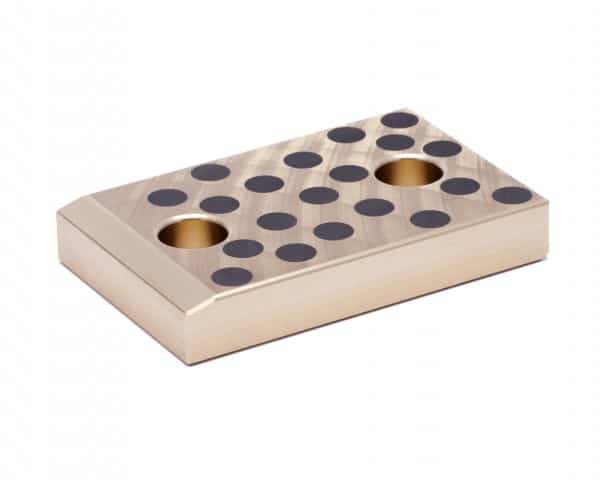
A slide bearing plate is a specialized component that enables movement between structural elements to avoid damage caused by thermal expansion, vibrations, or minor shifts in the foundation. These plates are typically made of durable materials such as stainless steel, bronze, or polytetrafluoroethylene (PTFE), which exhibit low friction and high resistance to wear.
The Role of Slide Bearing Plates
Slide bearing plates serve a crucial role in building structures, bridges, pipelines, and even machinery. By providing a frictionless interface, they accommodate relative movement (both horizontal and vertical) between structural elements while distributing the load evenly. They help maintain structural integrity in various circumstances, including temperature variations, seismic events, and even the subtle shifts in a building’s position due to soil settlement.
Different Types of Slide Bearing Plates
There are two primary types of slide bearing plates:
- Fixed bearing plates: These plates are designed to only bear the load of the structure and do not permit any movement. They are generally installed at the structure’s center, where no thermal expansion or contraction is expected.
- Sliding bearing plates: As the name suggests, these plates are designed to bear the structure’s load and allow for some movement. They are typically installed at the structure’s periphery, where thermal expansion or contraction could occur.
Essential Characteristics
Slide bearing plates must exhibit a few critical characteristics to perform their role effectively:
- Durability: These plates must resist wear and tear to withstand continuous movement over an extended period.
- Low Friction: To facilitate smooth sliding movement, the plates need to have a low coefficient of friction.
- Load Capacity: Depending upon the structure they are part of, slide bearing plates must be capable of bearing and distributing heavy loads.
Maintaining Slide Bearing Plates
Proper maintenance and inspection of slide bearing plates are essential to ensure their long-term performance. It includes regular checks for wear and tear, potential displacement, or damage to the plates. Any signs of distress must be addressed promptly to prevent more severe structural issues.
Conclusion
In conclusion, while slide bearing plates may seem like simple, unimpressive pieces of metal, they play a pivotal role in maintaining the health and durability of many structures we rely on daily. By allowing for safe movement and providing robust support, they help our structures stand the test of time and the elements. As technology continues to evolve, the materials and designs of slide bearing plates will likely see further improvements, further enhancing our structures’ longevity and safety.




Metal Bushing (Lubricated Metal) -Self-Lubricating Bushing Materials
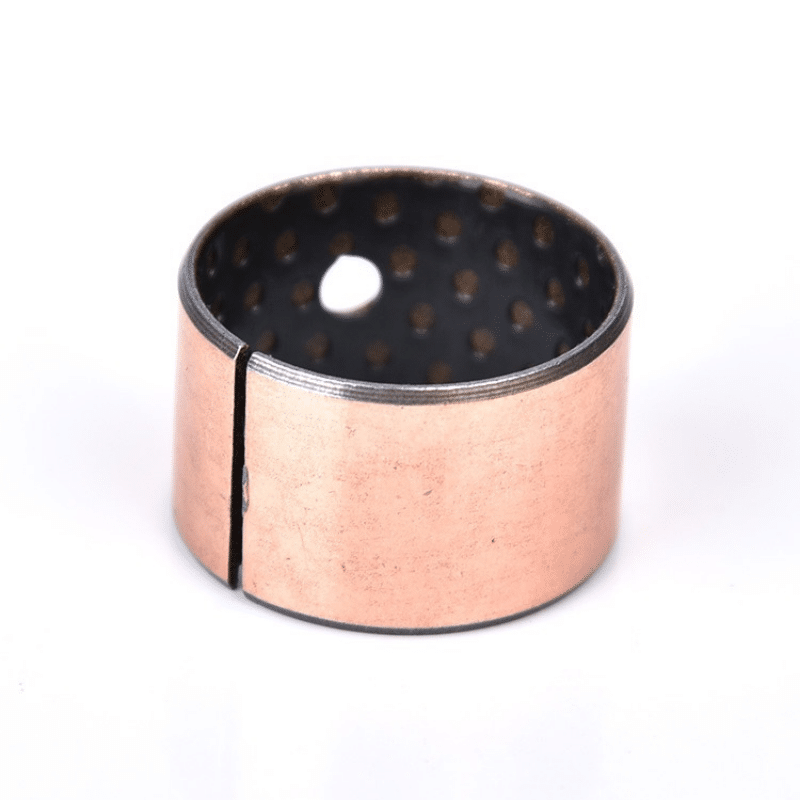
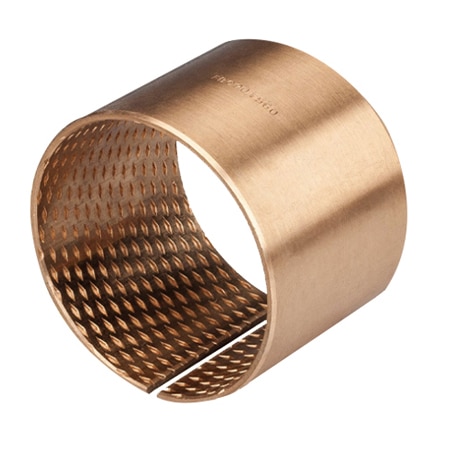
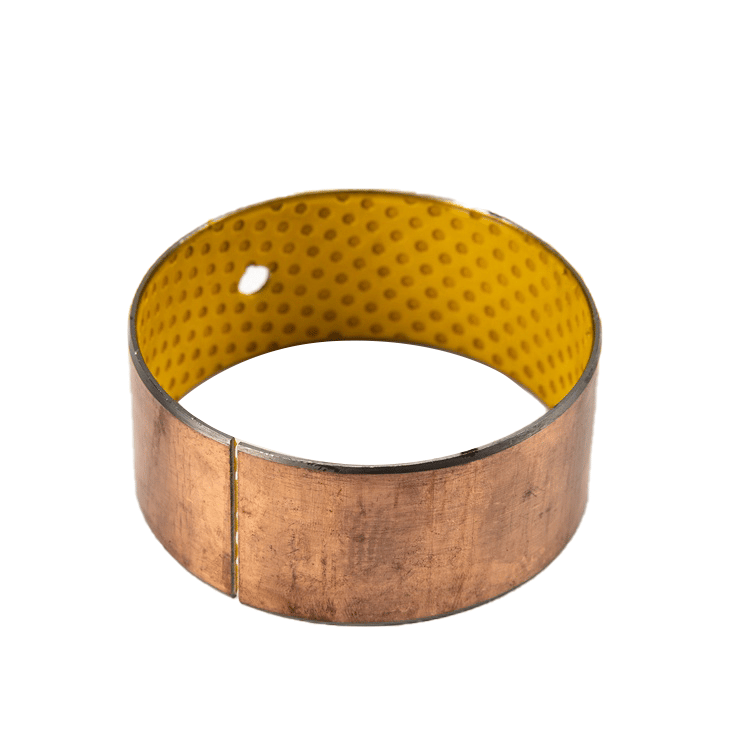
Bushings are specialized, self-lubricating metal components widely utilized across various industries due to their durability and low maintenance requirements. Self-lubricating metal bushings are engineered to function without additional lubrication in numerous applications, thereby minimizing maintenance needs. These bushings are available in various series and configurations, such as flanged bushings and split bearings, to meet specific application requirements.
Metal-Polymer Anti-Friction Plain Bearings
Metal-Polymer Composite Self-lubricating Bushing Material
Steel Back + Porous Bronze Sinter + PTFE
