
How does the sliding bearing move when it is working?
How does the sliding bearing move when it is working?
High-Performance Self-Lubricating Bronze Bushing Solutions & Technologies. Minimize downtime, extend service life, and reduce costs for dynamic applications.

Sliding Bearings: Experience Precision Movement for a Century and Beyond
For over a century, we have been the industry’s leading manufacturer of thrust, axial, and radial sliding bearings for pumps and rotating equipment applications. The experience we’ve accumulated is unparalleled, helping us provide innovative solutions for the ever-evolving demands of industry applications. Our sliding bearings offer low-speed and heavy-duty movement for operations where regular maintenance and lubrication are challenging. Notably, the sliding movement that these bearings facilitate is born from a complex interplay of precision manufacturing and material science.
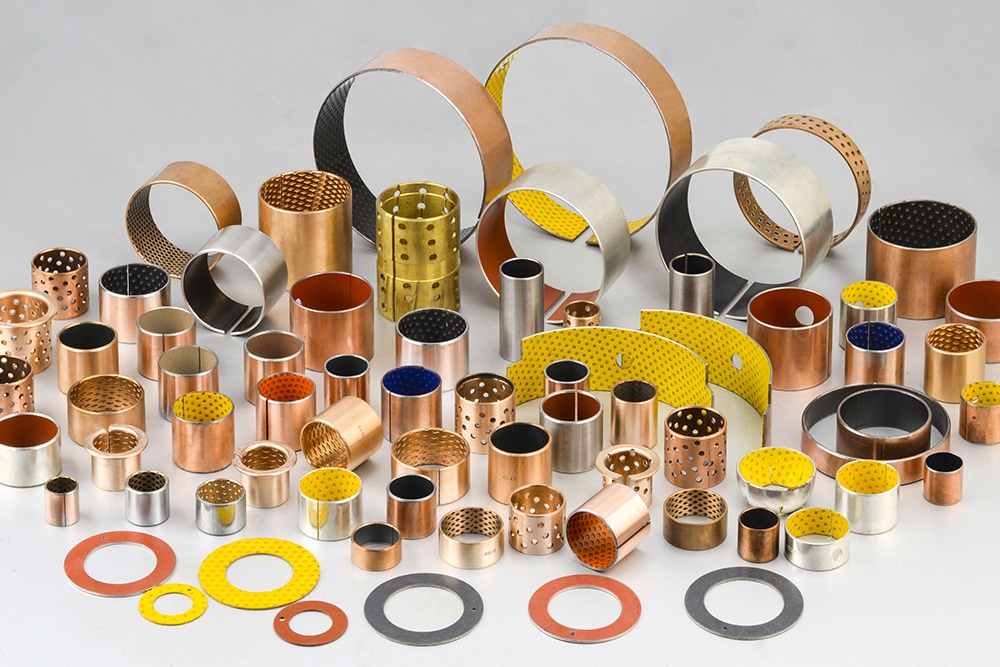
Specializing In sliding bushing and Bearings
Understanding Sliding Bearings
The sliding bearing is a type of bearing that operates under sliding friction. It ensures smooth, reliable, and noiseless operation. When lubricated, the sliding surfaces are separated by a lubricating oil, preventing direct contact. This separation drastically reduces friction loss and surface wear, while also offering certain vibration absorption capabilities.
The part of the shaft supported by the bearing is referred to as the journal, while the parts matching the journal are known as bearing bushings. To enhance the friction properties of the bearing pad surface, we cast an anti-friction material layer on the inner surface, known as the bearing liner. The materials of bearing bushings and bearing liners are collectively known as sliding bearing materials.


Understanding Plain Bearing, Self-lubricating
Plain bearings, also known as bushings, sleeve bearings, or slide bearings, are simple devices that bear and support radial or axial loads. They function by allowing a moving component, usually a shaft or a rod, to slide against their smooth surfaces, reducing friction and facilitating movement.
Self-lubricating plain bearing bushings offer a maintenance-free solution that delivers reliable performance over a long lifespan. They’re cost-effective, environmentally friendly, and an excellent choice for a wide range of applications. Whether you’re working with heavy machinery, automotive parts, or delicate electronics, self-lubricating bearings could be the answer to your friction and wear challenges.
Sliding Bearings bushing Supplier

Materials Of Sliding Bearings
Sliding bearings are crafted from a wide range of materials, carefully chosen to ensure optimal performance. These materials include bearing alloys (also known as Bimetal alloys or white alloys), wear-resistant cast iron, copper-based and aluminum-based alloys, powder metallurgy materials, plastics, rubber, hardwood, and carbon-graphite materials. We also use advanced materials such as polytetrafluoroethylene (PTFE), modified polyoxymethylene (POM), and others to meet specific operational demands.

Classification of Sliding Bearings
The classification of sliding bearings primarily depends on the type of material used. Sliding bearings can be categorized into non-metallic sliding bearings and metal sliding bearings. While both types come with their unique advantages, the right choice for your application depends on a variety of factors including load, speed, operating temperature, and lubrication requirements.
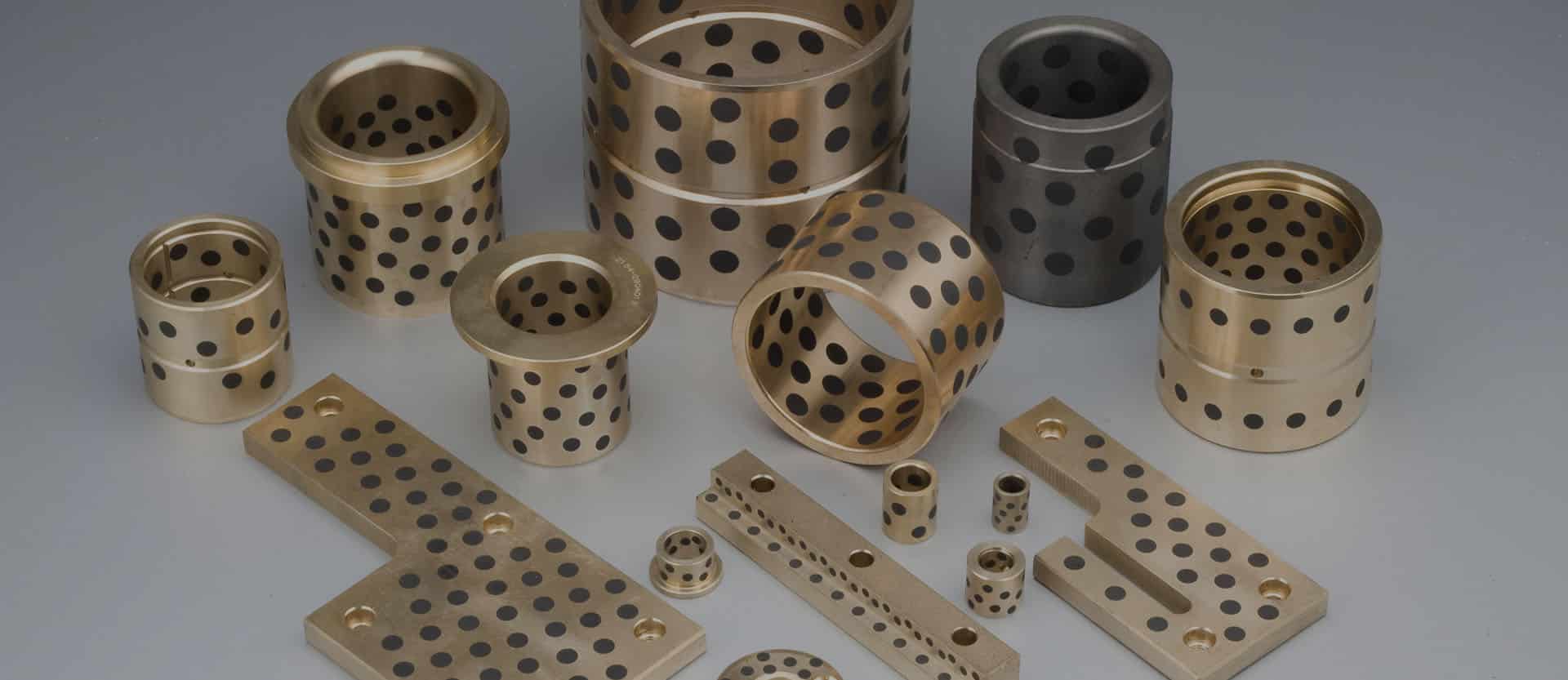
The Magic of Self-Lubrication
Self-lubricating bearings are a breakthrough in bearing technology. They incorporate lubricating materials into the bearing itself, eliminating the need for external lubrication and maintenance. These bearings either have tiny pockets of lubricating oil embedded in their material or are made of materials that naturally reduce friction. Over time, as the bearing operates, this lubrication is released onto the bearing’s surface, providing a constant layer of lubrication between the moving parts. This not only ensures smooth operation but also extends the bearing’s lifespan by reducing wear and tear.

More Than Just A Sliding Bearing Manufacturer
When it comes to our clients, we’re not merely a manufacturer of sliding bearings. We are their partners in performance, ensuring they have the precise sliding bearings they need for their application.
Whether you’re in need of a bearing that can handle a different load or size capability, accommodate specific tolerance needs, or manage specific torque, we have the expertise to design and produce a bearing that performs beyond expectations.
Come, join our world of sliding bearings today! Let’s co-create solutions that are efficient, reliable, and durable. Let’s move the future, together.
All You Need to Know About Self-Lubricating Plain Bearing Bushings
When it comes to bearings, the importance of lubrication cannot be overstated. Adequate lubrication reduces friction, minimizes wear and tear, and prolongs the bearing’s life. However, regular maintenance and lubrication can be a challenge in certain applications. This is where self-lubricating plain bearing bushings come into the picture.
Benefits of Self-Lubricating Plain Bearing Bushings
- Maintenance-Free Operation: The biggest advantage of self-lubricating bearings is that they require little to no maintenance. This makes them ideal for applications where regular lubrication is difficult or impossible, such as in hard-to-reach places or in equipment that operates in extreme conditions.
- Long Service Life: By providing continuous lubrication, self-lubricating bearings reduce wear and tear, significantly extending the life of the bearing.
- Improved Performance: The consistent layer of lubrication reduces friction, leading to smoother operation and improved efficiency.
- Cost Savings: Because they don’t require regular lubrication, self-lubricating bearings can offer significant cost savings over their lifespan. They reduce the need for maintenance and the associated labor costs, and there’s no need to purchase lubricants.
- Environmental Advantages: By eliminating the need for external lubrication, self-lubricating bearings also contribute to environmental sustainability. They avoid the risk of lubricant leaks and spills, which can be harmful to the environment.


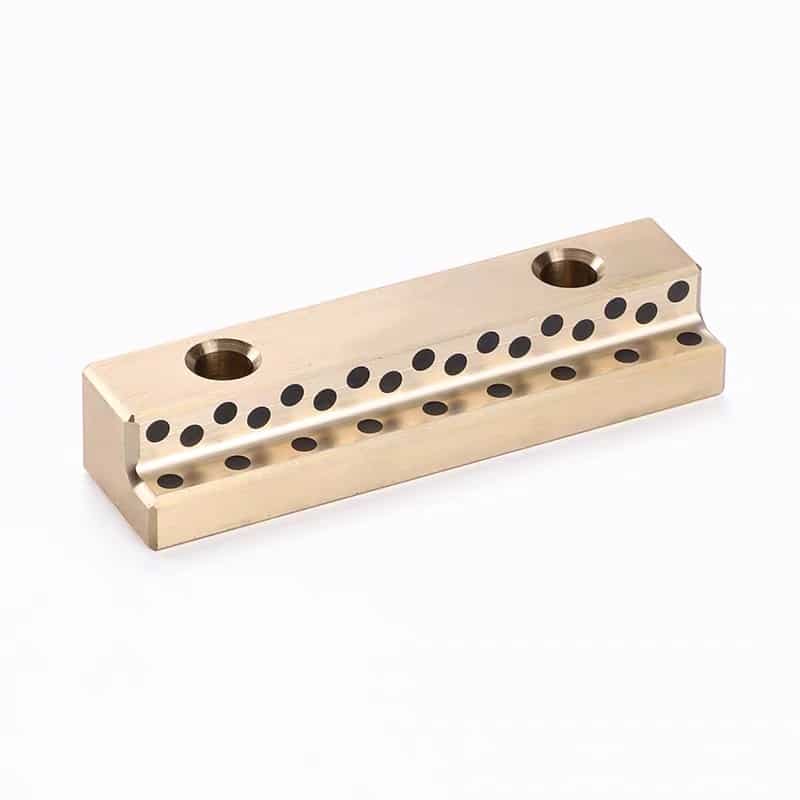
Metal Bushing (Lubricated Metal) -Self-Lubricating Bushing Materials
Bushings are specialized, self-lubricating metal components widely utilized across various industries due to their durability and low maintenance requirements. Self-lubricating metal bushings are engineered to function without additional lubrication in numerous applications, thereby minimizing maintenance needs. These bushings are available in various series and configurations, such as flanged bushings and split bearings, to meet specific application requirements.
Metal-Polymer Anti-Friction Plain Bearings
Metal-Polymer Composite Self-lubricating Bushing Material
Steel Back + Porous Bronze Sinter + PTFE
